
Tuesday, September 15, 2009

Wednesday, July 22, 2009
London Trip

Westminster Abbey

Buckingham Palace

Big Ben

Emirates Stadium... my favorite "football club" in Europe. This stadium is in the middle of a residential area!

Tower Bridge, not to be confused with London Bridge.

The Globe Theater... Shakespeare ring a bell?

St. Paul's Cathedral and the Millennium Bridge.

George Orwell's house!! Pop quiz, what famous book did he write? (hint: we studied it in World History II!!!!)
Thursday, June 25, 2009
APUSH 2009-2010

Welcome! We will use this blog as one of the many tools for the class this upcomming year. You can post questions, comments, and concerns here by clicking on the comments section below. I encourage you to utilize this function over the summer as you complete your summer work. Your summer work packets will be available on Monday in the main office at the high school. Good luck and feel free to drop a line here! Enjoy your vacations!
J
Tuesday, May 26, 2009
Book Review

Use the links below to help write your book review. These sites offer guidelines to follow for writing a review. Some of them will present information that seems contradictory (such as how long a review should be). The general guidelines are more helpful than any stipulations about length. Take note of the common themes discussed in each of the sites. Compile a "to do" checklist for yourself in preparation for writing your review. Your review will end up being between 2 and 3 pages long (1.5 spaced, no font larger than times size 12, no margin changes).
http://www.libraries.uc.edu/research/subject_resources/history/bookrev.html Check the bottom for links to electronic resources.
http://www.unc.edu/depts/wcweb/handouts/review.html
http://apps.carleton.edu/curricular/history/study/criticalbookreview/
http://courses.washington.edu/tande/book_reviews.htm
http://www.temple.edu/history/FJ/immerman/461/HowToWriteABookReview.html
Sunday, May 03, 2009
Freak Week, or, T-minus 4 Days

Any questions, comments, concerns etc... regarding the AP test should be discussed here.
Thursday, April 30, 2009
Ford, Carter, and Reagan Presidencies
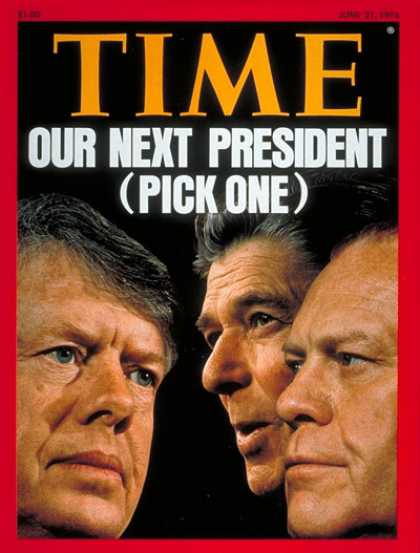
For your homework, please outline the presidencies of Ford, Carter, and Reagan.
You need only include the major events, legislation, court cases and policies of the time period as well as any social or cultural movements of significance. This can be in note or timeline form, whatever works for you!
J
Saturday, April 18, 2009

Tuesday, March 31, 2009
Cold War Timeline
Link 1
Using the link above and the handout from school, begin constructing a timeline of the Cold War from 1945-1963 (start with Hiroshima).
Your annotated timeline should include:
Dates, Lables, and a brief description of the event/legislation/court case etc... You need not write each item's significance on the time line.
Should be typed.
Using the link above and the handout from school, begin constructing a timeline of the Cold War from 1945-1963 (start with Hiroshima).
Your annotated timeline should include:
Dates, Lables, and a brief description of the event/legislation/court case etc... You need not write each item's significance on the time line.
Should be typed.
Thursday, March 12, 2009
EXTRA CREDIT: When did WWII begin?

German forces in the outskirts of Warsaw. In the background of the photograph, the city burns as a result of the German military assault. Warsaw, Poland, September 1939.
— National Archives and Records Administration, College Park, Md.
Using your knowledge of the period and an analysis of any documents you use from the site below (or other resources that you use).
Wednesday, February 25, 2009
Monday, January 26, 2009

Wednesday, January 21, 2009
Presidential Speeches
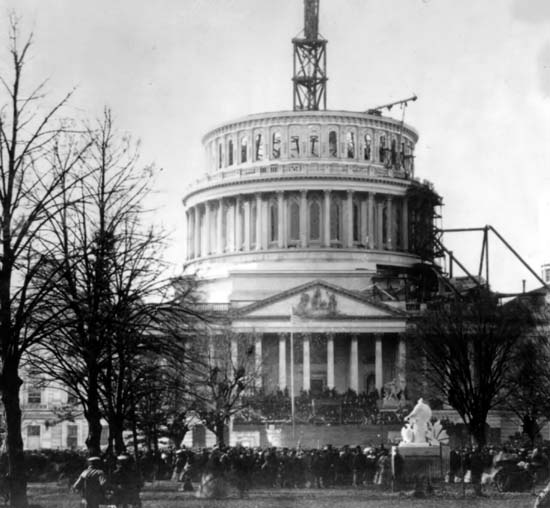
Assignment: Type a one page paper comparing Obama's speech to the speeches that were analyzed in class today. Focus your comparison on the tone, imagery and content of the speeches.
Obama's Speech 2009 - read it here
JFK inaugural speech 1961 - Read it or watch it
Lincoln Speech 1862 - read it
FDR Speech 1933 - read and listen here
Tuesday, December 16, 2008
Robber Barons and Captians of Industry?

John Jacob Astor
Andrew Carnegie
William Carnegie
Jay Cooke
James Buchanan Duke
James Fisk
Henry Ford
Henry Clay Frick
John Warne Gates
Jay Gould
Collis P. Huntington
Mark Hopkins
Charles Crocker
Leland Stanford
George Pullman
J.P. Morgan
Thomas Clark Durant
Daniel Drew
Thursday, December 11, 2008
Gilded Age Politics
HW Questions:
How did political machines emerge in U.S. cities?
Why were immigrants so important to political machines?
How did corruption and illegal activities develop in many political machines?
What events led to the collapse of public support for the Tweed Ring?
How did political machines emerge in U.S. cities?
Why were immigrants so important to political machines?
How did corruption and illegal activities develop in many political machines?
What events led to the collapse of public support for the Tweed Ring?
Friday, December 05, 2008
Exam Monday and Tuesday
APUSH
Review Exam Guide
The exam you will take on Monday will be a complete review of U.S. history. It will cover the following major units of study:
• Pre-Columbian America
• Exploration, the Columbian Exchange
• Settlement of the New World
• Colonial development & colonial life
• Rising tensions before the revolution
• The Revolutionary War
• The Constitution
• The Critical Period and the War of 1812
• Jacksonian Democracy
• Early Industry and the Market Economy
• Manifest Destiny and the Mexican War
• Reform movements of the 1830s-1850s
• Rising sectional tensions and slavery
• The Civil War
• Reconstruction
You have been given unit guides that list the terms, concepts, themes, Supreme Court cases etc… for these eras. If you don’t study you will not achieve high grades!
Here are the three possible time periods from which you will be writing a DBQ essay on Tuesday.
1. Jacksonian Democracy
2. Manifest Destiny
3. Reconstruction
Remember that you MUST draw on your own outside knowledge of the period (at least 50% of the essay!) in order to produce a meaningful essay.
- Andy, Kayleigh and Marge -- there is an 1840-1877 guide for you at Michelle's house if you need it. Call her to make arrangements... it is YOUR responsibility to get it. Not hers to give it to you. Happy studying!
Review Exam Guide
The exam you will take on Monday will be a complete review of U.S. history. It will cover the following major units of study:
• Pre-Columbian America
• Exploration, the Columbian Exchange
• Settlement of the New World
• Colonial development & colonial life
• Rising tensions before the revolution
• The Revolutionary War
• The Constitution
• The Critical Period and the War of 1812
• Jacksonian Democracy
• Early Industry and the Market Economy
• Manifest Destiny and the Mexican War
• Reform movements of the 1830s-1850s
• Rising sectional tensions and slavery
• The Civil War
• Reconstruction
You have been given unit guides that list the terms, concepts, themes, Supreme Court cases etc… for these eras. If you don’t study you will not achieve high grades!
Here are the three possible time periods from which you will be writing a DBQ essay on Tuesday.
1. Jacksonian Democracy
2. Manifest Destiny
3. Reconstruction
Remember that you MUST draw on your own outside knowledge of the period (at least 50% of the essay!) in order to produce a meaningful essay.
- Andy, Kayleigh and Marge -- there is an 1840-1877 guide for you at Michelle's house if you need it. Call her to make arrangements... it is YOUR responsibility to get it. Not hers to give it to you. Happy studying!
Friday, November 14, 2008
Antebellum Reform
1. What kinds of "utopian communities" were founded during the 1830s-1850s? What impulses may have led some unconventional Americans of the era to establish such communities?
2. What was transcendentalism? What were its main principles? What factors may have inspired the emergence of the transcendentalist movement at this time?
2. What was transcendentalism? What were its main principles? What factors may have inspired the emergence of the transcendentalist movement at this time?
Saturday, November 08, 2008
Weekend HW
1. Complete the 'Westward Expansion" outline if you have not already.
2. Begin researching for your paper (noting important information from various sources) and if you are ready begin outlining your research paper.
3. Find and print out a map of westward expansion from the internet. Verify its accuracy using your book/notes. Be sure it includes the dates of acquisition. Write a few bullets about how the land was acquired.
Have a good weekend!
2. Begin researching for your paper (noting important information from various sources) and if you are ready begin outlining your research paper.
3. Find and print out a map of westward expansion from the internet. Verify its accuracy using your book/notes. Be sure it includes the dates of acquisition. Write a few bullets about how the land was acquired.
Have a good weekend!
Wednesday, November 05, 2008
Economic Questions
1. How did Jackson view the role of the federal government with regard to the economy? Cite specific examples from his presidency (national bank, tariffs, internal improvements)
2. Discuss how the north west and south developed economically through the 1850s.
3. How would you describe the economic change that occurred in America from the ratification of the Constitution through the 1840s?
Please write each questions down in your notebook. Answer number one tonight and we will begin tomorrow's class by answering 2 and 3. Sorry for the post again, I'll figure this all out eventually.
2. Discuss how the north west and south developed economically through the 1850s.
3. How would you describe the economic change that occurred in America from the ratification of the Constitution through the 1840s?
Please write each questions down in your notebook. Answer number one tonight and we will begin tomorrow's class by answering 2 and 3. Sorry for the post again, I'll figure this all out eventually.
Thursday, October 30, 2008
Monroe Doctrine
The Monroe Doctrine
President James Monroe's seventh annual message to Congress, December 2, 1823:
At the proposal of the Russian Imperial Government, made through the minister of the Emperor residing here, a full power and instructions have been transmitted to the Minister of the United States at St. Petersburgh to arrange, by amicable negotiation, the respective rights and interests of the two nations on the northwest coast of this continent. A similar proposal has been made by His Imperial Majesty to the Government of Great Britain, which has likewise been acceded to. The Government of the United States has been desirous, by this friendly proceeding, of manifesting the great value which they have invariably attached to the friendship of the Emperor, and their solicitude to cultivate the best understanding with his Government. In the discussions to which this interest has given rise, and in the arrangements by which they may terminate the occasion has been judged proper for asserting, as a principle in which the rights and interests of the United States are involved, that the American continents, by the free and independent condition which they have assumed and maintain, are henceforth not to be considered as subjects for future colonization by any European powers....
It was stated at the commencement of the last session that a great effort was then making in Spain and Portugal, to improve the condition of the people of those countries, and that it appeared to be conducted with extraordinary moderation. It need scarcely be remarked, that the result has been, so far, very different from what was then anticipated. Of events in that quarter of the globe, with which we have so much intercourse, and from which we derive our origin, we have always been anxious and interested spectators. The citizens of the United States cherish sentiments the most friendly, in favor of the liberty and happiness of their fellow men on that side of the Atlantic. In the wars of the European powers, in matters relating to themselves, we have never taken any part, nor does it comport with our policy to do so. It is only when our rights are invaded, or seriously menaced, that we resent injuries, or make preparation for our defence. With the movements in this hemisphere, we are, of necessity, more immediately connected, and by causes which must be obvious to all enlightened and impartial observers. The political system of the allied powers is essentially different, in this respect, from that of America. This difference proceeds from that which exists in their respective governments. And to the defence of our own, which has been achieved by the loss of so much blood and treasure, and matured by the wisdom of their most enlightened citizens, and under which we have enjoyed unexampled felicity, this whole nation is devoted. We owe it, therefore, to candor, and to the amicable relations existing between the United States and those powers, to declare, that we should consider any attempt on their part to extend their system to any portion of this hemisphere, as dangerous to our peace and safety. With the existing colonies or dependencies of any European power we have not interfered, and shall not interfere. But with the governments who have declared their independence, and maintained it, and whose independence we have, on great consideration, and on just principles, acknowledged, we could not view any interposition for the purpose of oppressing them, or controlling, in any other manner, their destiny, by any European power in any other light than as the manifestation of an unfriendly disposition towards the United States. In the war between those new governments and Spain we declared our neutrality at the time of their recognition, and to this we have adhered, and shall continue to adhere, provided no change shall occur, which, in the judgement of the competent authorities of this government, shall make a corresponding change, on the part of the United States, indispensable to their security.
The late events in Spain and Portugal, shew that Europe is still unsettled. Of this important fact, no stronger proof can be adduced than that the allied powers should have thought it proper, on any principle satisfactory to themselves, to have interposed, by force, in the internal concerns of Spain. To what extent such interposition may be carried, on the same principle, is a question, to which all independent powers, whose governments differ from theirs, are interested; even those most remote, and surely none more so than the United States. Our policy, in regard to Europe, which was adopted at an early stage of the wars which have so long agitated that quarter of the globe, nevertheless remains the same, which is, not to interfere in the internal concerns of any of its powers; to consider the government de facto as the legitimate government for us; to cultivate friendly relations with it, and to preserve those relations by a frank, firm, and manly policy; meeting, in all instances, the just claims of every power; submitting to injuries from none. But, in regard to these continents, circumstances are eminently and conspicuously different. It is impossible that the allied powers should extend their political system to any portion of either continent, without endangering our peace and happiness: nor can any one believe that our Southern Brethren, if left to themselves, would adopt it of their own accord. It is equally impossible, therefore, that we should behold such interposition, in any form, with indifference. If we look to the comparative strength and resources of Spain and those new governments, and their distance from each other, it must be obvious that she can never subdue them. It is still the true policy of the United States to leave the parties to themselves, in the hope that other powers will pursue the same course.
-----------------------------------------------------------------------------
Questions:
1. Trace the major events that led to the Monroe Dcortine. List and describe each.
2. What is the purpose of the doctrine? (what policy does it outline?)
3. What questions do you have about it?
President James Monroe's seventh annual message to Congress, December 2, 1823:
At the proposal of the Russian Imperial Government, made through the minister of the Emperor residing here, a full power and instructions have been transmitted to the Minister of the United States at St. Petersburgh to arrange, by amicable negotiation, the respective rights and interests of the two nations on the northwest coast of this continent. A similar proposal has been made by His Imperial Majesty to the Government of Great Britain, which has likewise been acceded to. The Government of the United States has been desirous, by this friendly proceeding, of manifesting the great value which they have invariably attached to the friendship of the Emperor, and their solicitude to cultivate the best understanding with his Government. In the discussions to which this interest has given rise, and in the arrangements by which they may terminate the occasion has been judged proper for asserting, as a principle in which the rights and interests of the United States are involved, that the American continents, by the free and independent condition which they have assumed and maintain, are henceforth not to be considered as subjects for future colonization by any European powers....
It was stated at the commencement of the last session that a great effort was then making in Spain and Portugal, to improve the condition of the people of those countries, and that it appeared to be conducted with extraordinary moderation. It need scarcely be remarked, that the result has been, so far, very different from what was then anticipated. Of events in that quarter of the globe, with which we have so much intercourse, and from which we derive our origin, we have always been anxious and interested spectators. The citizens of the United States cherish sentiments the most friendly, in favor of the liberty and happiness of their fellow men on that side of the Atlantic. In the wars of the European powers, in matters relating to themselves, we have never taken any part, nor does it comport with our policy to do so. It is only when our rights are invaded, or seriously menaced, that we resent injuries, or make preparation for our defence. With the movements in this hemisphere, we are, of necessity, more immediately connected, and by causes which must be obvious to all enlightened and impartial observers. The political system of the allied powers is essentially different, in this respect, from that of America. This difference proceeds from that which exists in their respective governments. And to the defence of our own, which has been achieved by the loss of so much blood and treasure, and matured by the wisdom of their most enlightened citizens, and under which we have enjoyed unexampled felicity, this whole nation is devoted. We owe it, therefore, to candor, and to the amicable relations existing between the United States and those powers, to declare, that we should consider any attempt on their part to extend their system to any portion of this hemisphere, as dangerous to our peace and safety. With the existing colonies or dependencies of any European power we have not interfered, and shall not interfere. But with the governments who have declared their independence, and maintained it, and whose independence we have, on great consideration, and on just principles, acknowledged, we could not view any interposition for the purpose of oppressing them, or controlling, in any other manner, their destiny, by any European power in any other light than as the manifestation of an unfriendly disposition towards the United States. In the war between those new governments and Spain we declared our neutrality at the time of their recognition, and to this we have adhered, and shall continue to adhere, provided no change shall occur, which, in the judgement of the competent authorities of this government, shall make a corresponding change, on the part of the United States, indispensable to their security.
The late events in Spain and Portugal, shew that Europe is still unsettled. Of this important fact, no stronger proof can be adduced than that the allied powers should have thought it proper, on any principle satisfactory to themselves, to have interposed, by force, in the internal concerns of Spain. To what extent such interposition may be carried, on the same principle, is a question, to which all independent powers, whose governments differ from theirs, are interested; even those most remote, and surely none more so than the United States. Our policy, in regard to Europe, which was adopted at an early stage of the wars which have so long agitated that quarter of the globe, nevertheless remains the same, which is, not to interfere in the internal concerns of any of its powers; to consider the government de facto as the legitimate government for us; to cultivate friendly relations with it, and to preserve those relations by a frank, firm, and manly policy; meeting, in all instances, the just claims of every power; submitting to injuries from none. But, in regard to these continents, circumstances are eminently and conspicuously different. It is impossible that the allied powers should extend their political system to any portion of either continent, without endangering our peace and happiness: nor can any one believe that our Southern Brethren, if left to themselves, would adopt it of their own accord. It is equally impossible, therefore, that we should behold such interposition, in any form, with indifference. If we look to the comparative strength and resources of Spain and those new governments, and their distance from each other, it must be obvious that she can never subdue them. It is still the true policy of the United States to leave the parties to themselves, in the hope that other powers will pursue the same course.
-----------------------------------------------------------------------------
Questions:
1. Trace the major events that led to the Monroe Dcortine. List and describe each.
2. What is the purpose of the doctrine? (what policy does it outline?)
3. What questions do you have about it?
Sunday, October 26, 2008
Interwebs
So it looks as if the post I put up on Friday has not been able to be seen by some of you. Since this is the case we will pick up on Monday with what would have been your homework.
J
J
Subscribe to:
Posts (Atom)