 Olive Branch Petition: Read the document and answer the questions at the end. Consider the date and what is says about colonial sentiment towards Britain.

Tuesday, September 28, 2010
Evolution of the Revolution
Olive Branch Petition: Read the document and answer the questions at the end. Consider the date and what is says about colonial sentiment towards Britain.
Tuesday, September 21, 2010
Slavery in the New World
Check out the video below and peruse the links to gain insight into the slave trade and the establishment of slavery in the New World.
http://0.tqn.com/d/africanhistory/1/0/6/M/SlaveryTable002.jpg
http://0.tqn.com/d/africanhistory/1/0/7/M/TriangleTrade001.jpg
http://www.pbs.org/wgbh/aia/part1/1narr4.html
http://www.bbc.co.uk/history/british/empire_seapower/barbados_01.shtml
http://uncpress.unc.edu/browse/page/308
http://en.wikipedia.org/wiki/Haitian_Revolution
Lecture 21: New World Slavery from Steven Volk on Vimeo.
http://0.tqn.com/d/africanhistory/1/0/6/M/SlaveryTable002.jpg
http://0.tqn.com/d/africanhistory/1/0/7/M/TriangleTrade001.jpg
http://www.pbs.org/wgbh/aia/part1/1narr4.html
http://www.bbc.co.uk/history/british/empire_seapower/barbados_01.shtml
http://uncpress.unc.edu/browse/page/308
http://en.wikipedia.org/wiki/Haitian_Revolution
Thursday, September 02, 2010
Summer Reading

The American Revolution: A History
by: Gordon Wood
Complete a book review and take approproate notes about the history of the American Revolution.
Here is a link to buy the book online: http://www.amazon.com/American-Revolution-History-Library-Chronicles/dp/0812970411
Friday, April 16, 2010
Deciding to use the Atomic Bomb

Using the links below you must develop a 1-2 page analysis of the government's decision to use atomic weapons on Japan. In your typed paper please answer the following:
How was the bomb developed?
Who is responsible for the use of these weapons?
What was the aftermath of using these weapons?
What lessons should we learn from this event?
http://www.history.army.mil/books/70-7_23.htm
http://www.dannen.com/decision/index.html
Perhaps the best set of links can be found here:
http://www.trumanlibrary.org/whistlestop/study_collections/bomb/large/index.php
Wednesday, April 14, 2010
Japanese Internment

Follow the link below. Read or look at the primary sources listed on the site and complete the accompanying questions. GID!
http://www.ohs.org/education/oregonhistory/learning_center/dspPrint.cfm?resource_ID=FC218438-FF32-E1B7-86B4F4B030BFC962
Student project on internment:
Monday, April 12, 2010
Who or what is to blame for Pearl Harbor?

After reading the selection and carefully analyzing and annotating the text...
WHO OR WHAT WAS AT FAULT FOR THE ATTACK ON PEARL HARBOR?
Wednesday, April 07, 2010
Bubbles, Boom, & Bust

The Great Depression and the current recession may have some common causes. It is your task to tease out any similarities that you can glean from your study of the period (this means you have to have read about it... probably several times) along with the information from the article/links below. Good luck.
MUST READ: http://www.publicintegrity.org/investigations/economic_meltdown/
SUGGESTED READING:
http://money.cnn.com/2009/03/25/news/economy/depression_comparisons/index.htm
http://financeprofessorblog.blogspot.com/2009/05/james-surowiecki-on-boom-and-on-banks.html
http://www.dollarsandsense.org/blog/2009/02/great-real-estate-bubble-of-roaring.html
Great Video to help your understanding
Watch CBS News Videos Online
Friday, March 26, 2010
The 1920s

GUIDING QUESTION:
Two words historians use to describe the 1920s are “normalcy” and “roaring” – In what ways are these monikers accurate or not?
1920s Excerpt Project:
Select 3 of the following figures who came to prominence in the 1920s (you may convince me of someone else on your own if you wish):
Mitchell Palmer
Henry Ford
Al Capone
Clarence Darrow
Margaret Sanger
Babe Ruth
Louis Armstrong
Langston Hughes
T.S. Elliot
Ezra Pound
F. Scott Fitzgerald
Ernest Hemmingway
William Faulkner
Texas Guinan
Hiram Wesley Evans
Jack Dempsey
Charles Lindbergh
“Amos ‘n’ Andy”
Early Hollywood Figures (your choice, of course)
Marcus Garvey
Sinclair Lewis
Frank Lloyd Wright
and…
• Research, collect, and communicate an excerpt from one of their “works”. The excerpt can be written, audio, visual/video etc... BE CREATIVE... do not simply select the first quote you come across... connect /reflect the time period!
• Explain its significance to the time period (How does it reflect the 1920s? Does it uphold or breakdown traditional views of the period? Other conclusions).
Monday, March 15, 2010
Wilson, the 14 Points, and Versailles

Study the timeline below. Given what you already know of the time period, why do you think it was so difficult for Wilson to achieve passage of his 14 Points through the Senate? What domestic and world events might have affected his ability to convince the Senate of its gravitas and worth to America? Answer in a detailed paragraph or two.
TIMELINE OF EVENTS
1918: Wilson's Peace Proposal, Fourteen Points.
November 1918: Midterm Elections. Wilson makes a partisan appeal for a Democratic congress to ensure support for his foreign policies.
5 November 1918: Democrats lose control of both houses of congress.
December 1918: Wilson arrives in Paris without a single prominent Republican in the delegations.
14 February 1919: Lincoln reports to the plenary session with the finished draft of the League Covenant.
April 1919: Senator Henry Cabot Lodge and thirty-nine senators declare that the covenant of the League is unacceptable.
8 July 1919: Wilson returns home with the Versailles Treaty and calls on the Senate to accept "This Great Duty."
August 1919: Henry Cabot Lodge, chairman of the Senate Foreign Relations Committee, resorts to delay tactics and lengthy hearings. He personally dislikes Wilson.
September 1919: Wilson, to garner support for his foreign policies, embarks on a nation-wide speaking tour.
25 September 1919: Wilson's doctor cancels Wilson's tour and Wilson is hurried back to Washington.
2 October 1919: Wilson suffers a severe stroke and paralysis.
7-19 November 1919: The Senate adopts fourteen of Lodge's reservations concerning the Treaty of Versailles, most having to do with the League.
December 1919: The Senate votes to reconsider.
January, February 1920: Wilson remains adamant that there are to be no reservations.
March 1920: Twenty-one Democrats abandon Wilson's ship and join the reservationists. Treaty still not ratified.
20 May 1920: Congress ends the war by joint resolution.
2 July 1921: Harding is now president. Another joint resolution declares the state of war with Austria and German over.
I CAN HAEV LYNKZ!!
Wednesday, March 10, 2010
WWI at Home

Remember to define and give the significance of your term as a comment below. Be thorough. Feel free to ask others questions/comment on contributions in a respectful manner.
Tuesday, February 09, 2010
American Imperialism

Towards the turn of the century, many Americans sought to expand U.S. influence beyond its traditional borders. We will trace the causes, course, and consequences of this new Manifest Destiny by analyzing primary source "sets". Follow the links below:
http://americanhistory.si.edu/militaryhistory/printable/section.asp?id=7
http://www.besthistorysites.net/USHistory_EarlyImperialism.shtml
In your groups you will:
1. Select 3-5 primary sources
2. Analyze their significance to the topic of American Imperialism
3. How does it enhance your understanding of the time period?
4. Any conclusions you can draw from the ste as a whole?
5. How will you present these (.ppt?)
Wednesday, January 20, 2010
Go West! No U!

Frederick Jackson Turner was an American historian. Writing in 1893 about the significance of the western frontier in American history, Turner discusses the evolution of American society, economy, politics, and culture. Pay attention to his thesis and supporting arguments.
Turner's Thesis
Identify the thesis
List other major points
Develop at least 2 questions (things you are confused by or wondering about)
Agree or disgaree with Turner? Why?
It is no coincidence that in ten years the first motion picture in U.S. history would be created about the west. As the "frontier era" came to a close, the great American myth was born. This myth would be worked and reworked throughout the 1900s and can serve to provide us much useful information about American identity throughout history.
Wednesday, January 06, 2010
Indian Wars

You can find your documents here.
Search the following terms in whole or in part to find the link that corresponds to your topic (I'm doing this from memory so if the name doesn't match your topic, no big deal):
Tom - 1864-65 Sand Creek massacre
Josh - 1868 -1874 Buffalo Harvest (of course we know there are no buffalo in the U.S... only bison)
Eric - 1868 Fort Laramie Treaty
Brendan - 1876 Chief Red Horse, an eyewitness account of the Battle of Little Bighorn
Walt - 1876 George, Herendon, Custer's Last Stand
J - 1877-1879 Chief Joseph, selected statements by the Nez Perce leader
Syd - 1884 The pursuit and capture of Chief Joseph
Alex - 1890 The massacre at Wounded Knee
Zach - 1890 Lakota Accounts of Massacre at Wounded Knee
After reading and analyzing your primary source, leave a comment giving a brief summary analysis. Remember, no babies.
Tuesday, September 15, 2009
Wednesday, July 22, 2009
London Trip

Westminster Abbey

Buckingham Palace

Big Ben

Emirates Stadium... my favorite "football club" in Europe. This stadium is in the middle of a residential area!

Tower Bridge, not to be confused with London Bridge.

The Globe Theater... Shakespeare ring a bell?

St. Paul's Cathedral and the Millennium Bridge.

George Orwell's house!! Pop quiz, what famous book did he write? (hint: we studied it in World History II!!!!)
Thursday, June 25, 2009
APUSH 2009-2010

Welcome! We will use this blog as one of the many tools for the class this upcomming year. You can post questions, comments, and concerns here by clicking on the comments section below. I encourage you to utilize this function over the summer as you complete your summer work. Your summer work packets will be available on Monday in the main office at the high school. Good luck and feel free to drop a line here! Enjoy your vacations!
J
Tuesday, May 26, 2009
Book Review

Use the links below to help write your book review. These sites offer guidelines to follow for writing a review. Some of them will present information that seems contradictory (such as how long a review should be). The general guidelines are more helpful than any stipulations about length. Take note of the common themes discussed in each of the sites. Compile a "to do" checklist for yourself in preparation for writing your review. Your review will end up being between 2 and 3 pages long (1.5 spaced, no font larger than times size 12, no margin changes).
http://www.libraries.uc.edu/research/subject_resources/history/bookrev.html Check the bottom for links to electronic resources.
http://www.unc.edu/depts/wcweb/handouts/review.html
http://apps.carleton.edu/curricular/history/study/criticalbookreview/
http://courses.washington.edu/tande/book_reviews.htm
http://www.temple.edu/history/FJ/immerman/461/HowToWriteABookReview.html
Sunday, May 03, 2009
Freak Week, or, T-minus 4 Days

Any questions, comments, concerns etc... regarding the AP test should be discussed here.
Thursday, April 30, 2009
Ford, Carter, and Reagan Presidencies
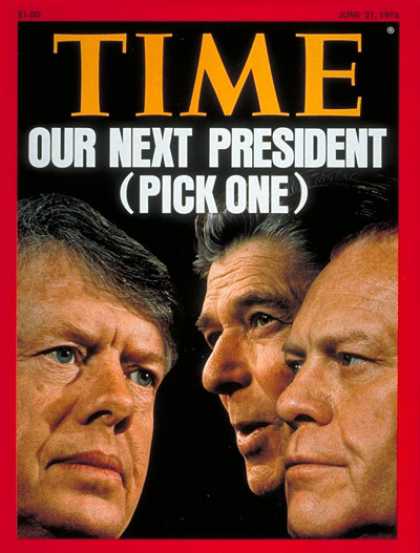
For your homework, please outline the presidencies of Ford, Carter, and Reagan.
You need only include the major events, legislation, court cases and policies of the time period as well as any social or cultural movements of significance. This can be in note or timeline form, whatever works for you!
J
Saturday, April 18, 2009



Subscribe to:
Posts (Atom)