Below are two helpful review sites for the AP exam.
http://mrssciorilli.wikispaces.com/file/view/AP+US+Study+Guide+and+Review.pdf
http://faculty.polytechnic.org/gfeldmeth/ap4.pdf
http://www.dce.k12.wi.us/srhigh/socialstudies/AP%20Classes/APUSHistory/AP%20Review%20Packet%20pdf..pdf

Tuesday, April 26, 2011

Monday, April 11, 2011
The Final Push: Pre-Exam Post

Monday – April 11th
Oral Presentations: Social/Cultural Movements of the 1960s
Thorough notes on each subject
Q&A session after school
Homework: Vietnam Reappraisal Guide
Tuesday – April 12th
The Vietnam War and its Legacy: Class Discussion
Basics – Review timeline info/homework to understand chronology
Essential Questions regarding Vietnam:
Who or what bears responsibility for causing the conflict?
Why was Vietnam so divisive?
What led to the end of the war?
What is/should be Vietnam’s legacy?
Analysis – Vietnam Veterans Memorial – Appropriate remembrance?
Homework: Reading/Notes on Nixon Administration
Wednesday – April 13th
Nixon’s presidency – Assessing his Presidency
The Silent Majority and the birth of New Conservatism
Track record: Domestic/Foreign Policies (Watergate, Détente, etc…)
Popular History and the case of Nixon – Is he a villain?
Homework: 1-2 pager, Assess Nixon’s Presidency
Thursday –April 14th
Class Part I – Ford & Carter’s Presidencies – Important Events
Part II – Reagan, the New Right, and the End of the Cold War
Reaganomics, Re-escalation, Revolution?
Homework: Reagan Presidential Outline (F/D, Successes/Failures, Legacy?)
Friday – April 15th
Reagan and modern history
Reagan as hero? Outline overview
End of the Cold War – Implications
VACATION
Complete Cold War Timelines to be handed in on the Monday you return
Outline notes on the final chapters of your book
Multiple Choice Test on Monday, WWII to Present
Review April 26th – May 5th
AP TEST : FRIDAY MAY 6th!!!!!!!!!!!!!!!
Helpful Links:
Vietnam
Nixon's Presidency
Nixon's Presidency II
Ford & Carter
Reagan I
Reagan II
Wednesday, April 06, 2011

Tuesday, March 29, 2011
Cold War Secondary Sources

Below are links to the two secondary sources that were chosen by each group. After reading/annotating the texts, answer the questions that follow in organized and well-thought-out paragraphs. Support your answers with evidence from the text and outside information.
Cold War Pop Culture
1)How did the U.S. government influence popular culture in society during the 1950's?
2)How did U.S. relations with the Soviet Union affect filmmaking in the 1940's and 50's?
Civil Rights
1) What does the article contend as being the real reasons for the Supreme Court's decision?
2) How do these reasons differ from the popular history version of the story?
Thursday, March 24, 2011
How to Research

1. Know your topic (example: Civil Rights and the Cold War, Vietnam Films, etc...)
2. Decide what tools you will use to research the topic
3. Do basic research (textbook, online hisotry sites, NOT Wikis etc...)
4. Plan what key concepts you will research more thoroughly
5. Use research tools (online journals, books, films, etc...)
6. There are MANY FREE ways to get access to these resrouces. For instance, the Boston Public Library offers an e-card to anyone that signs up for it. Find the sign up HERE.
7. Fill out the information and WIRE DOWN YOUR PASSWORD IN AN E-MAIL TO YOURSELF!
8. Use the electronic resources tab to begin your research
9. Determine what journals may be useful to find information... you could use this tool to help ...
10. Use keywords from your research (NOT A QUESTION) in the appropriate field on the electronic resrouces site.
11. Once you have searched keywords in a journal or more broadly from the library's e-resources page you will have a number of results to select from. The most useful articles will provide a link to a FULL TEXT version.
12. You must be willing to READ for RESEARCH. This means that you can not simply "click around" to find a relevant article. KNOW the resource is a relevant one by reading it and considering how it fits into your resarch goals.
13. Once you find relevant articles, save them to your computer profile and e-mail them to yourself for safe-keeping, you don't want to have to find them all over again if you can avoid it.
Friday, March 11, 2011
Thursday, March 10, 2011
Japanese Internment

Was the internment of Japanese-American citizens justified during World War II?
Your answer should be/include:
1-2 pages typed, 12 point Times New Roman or Calibri font
1.5 spaced
College heading (example here)

Short quotes to support your conclusions (from documents)
Include an introduction paragraph which includes a thesis statement
Support the thesis with SEVERAL pieces of outside information. Use your notes.
Be persuasive
Links with information for research is below... you should be including an analysis of some of the information here. Cite it parenthetically in your paper.
Executive Order 9066
http://www.ohs.org/education/oregonhistory/learning_center/dspPrint.cfm?resource_ID=FC218438-FF32-E1B7-86B4F4B030BFC962
Korematsu Case (search within PDF for majority and minority opinion)
You may e-mail me your paper. It must be saved as a Word 2003-2007 file or shared as a google doc. No late papers will be accepted.
Friday, March 04, 2011
Pearl Harbor: Surprise or Expected?

Using your knowledge of the time period and your analysis of the documents linked below, answer the question:
Who and or what is responsible for the attack on Pearl Harbor?
Your answer should be/include:
1-2 pages typed, 12 point Times New Roman or Calibri font
1.5 spaced
College heading (example here)
Short quotes to support your conclusions (from documents)
Include an introduction paragraph which includes a thesis statement
Support the thesis with SEVERAL pieces of outside information. Use your notes.
Be persuasive
Documents can be found here.
You may e-mail me your paper. It must be saved as a Word 2003-2007 file or shared as a google doc. No late papers will be accepted.
Film Class: D-Day Sources

Answer the two questions below after viewing the film and researching the links below.
1. Does "Saving Private Ryan" accurately depict the D-Day landings at Omaha Beach?
2. What is the director's purpose in attempting to "get it right"? Does detailed historical accuracy matter in film? Why or why not?
http://www.history.navy.mil/photos/events/wwii-eur/normandy/nor4o.htm
http://www.historylink101.com/wwII_b-w/d-day/beaches1/index.html
http://arcweb.archives.gov/arc/action/ShowDODescriptions?%24searchId=1&%24showFullDescriptionTabs.selectedPaneId=&%24digiDetailPageModel.currentPage=0&%24resultsPartitionPageModel.targetModel=true&%24resultsSummaryPageModel.pageSize=10&%24partitionIndex=0&%24digiSummaryPageModel.targetModel=true&%24submitId=1&%24resultsDetailPageModel.search=true&%24digiDetailPageModel.resultPageModel=true&%24resultsDetailPageModel.currentPage=0&%24showArchivalDescriptionsTabs.selectedPaneId=digital&%24resultsDetailPageModel.pageSize=1&%24resultsSummaryPageModel.targetModel=true&%24sort=RELEVANCE_ASC&%24resultsPartitionPageModel.search=true&%24highlight=false
http://www.skylighters.org/photos/robertcapa.html
http://hubpages.com/hub/D-Day-Footage-and-Videos-from-June-6-1944
Wednesday, January 26, 2011
Case Study: Spanish American War

Answer the following questions for homework after carefully reviewing/researching the Spanish American War. You must complete questions 1-8 for Thursday. If there is a snow day you must complete questions 9-17 for Friday. No excuses.
1. What factors led to friction between Cuban rebels and the Spanish rulers of Cuba during the late 19th century? How did Americans perceive this conflict? What stance did the U.S. government initially adopt towards this conflict?
2. What was the deLôme letter? What did it indicate about how Spain viewed the United States? What impact did it have on the American publicís view of Spain and Spainís role in Cuba?
3. How does the rise of the newspaper empires of William Randolph Hearst and Joseph Pulitzer reflect the societal and technological changes brought on by industrialization?
4. What was "yellow journalism"? How did American newspaper reports of the war between Cuban rebels and the Spanish reflect Americansí views of the conflict? How might yellow journalism have promoted war between the United States and Spain?
5. What was the Maine and why was it stationed off Cuba? What caused the Maine to explode? At the time, how did Americanís interpret the explosion of the Maine? What impact did the Maine incident have on the American decision to engage in war with Spain?
6. What role did African-Americans play in the Spanish-American War? How were black regiments treated in the American South? Why might blacks have felt ambivalent about serving the United States in the war?
7. Why did some call the Spanish-American War, a "splendid little war?" Why was it such a popular war among Americans?
8. In his "War Message" why does President McKinley urge Congress to declare war against Spain?
9. Why did the proposed annexation of the Philippines create such conflict among Americans? What were the arguments for and against the annexation of the Philippines?
10. What arguments did Anti-imperialists use to oppose annexation of the Philippines and imperialism more generally? Why might individuals as diverse as Samuel Gompers, Andrew Carnegie, and Booker T. Washington have all opposed imperialism? What impact might this diversity have had on the effectiveness of the anti-imperialist movement?
11. How might both imperialism and anti-imperialism be seen as progressive?
12. Traditionally, why might historians have rarely written about the Philippine- American War?
13. Why had Philippine leader Emilio Auginaldo supported the United States in the Spanish-American War? Why did Auginaldo, who had supported the U.S. in the Spanish-American War, then lead a revolt against the U.S. in 1899?
14. What was the Taft Commission? What did it indicate about the way Americans saw their role in the Philippines? In what sense was the Taft Commission progressive?
15. What principle did the U.S. Supreme Court assert in the Insular Cases (Dooley v. U.S., Downes v. Bidwell, etc.)? What did this suggest about the way Americans viewed the peoples of territories annexed by the United States during the late 19th century?
16. What was the Foraker Act? What did it suggest about the way Americans viewed the United Statesí role in the Western Hemisphere during the late 19th and early 20th century?
17. What were the provisions of the Platt Amendment? What did it suggest about the way Americans viewed the United Statesí role in the Western Hemisphere during the late 19th and early 20th century?
Friday, January 07, 2011
Gilded Age Advertising

Using the links below you will study advertising from the post Civil-War period.
http://www.library.hbs.edu/hc/exhibits/tcard/
http://www.library.hbs.edu/hc/exhibits/trade/exhibit.htm
http://www.tradecards.com/articles/articles.html
Once you have perused the catalogs/trade cards you and your partner should SELECT ONE and answer the worksheet questions for that particular card. If you have a hard time answer the questions for a particular ad, select another! You may be asked to give a short presentation on your particular ad.
YOU MUST POST A LINK TO YOUR AD IN THE COMMENTS SECTION WITH YOUR NAMES!!!
Wednesday, December 22, 2010

For vacation you should:
1. Read chapters 16, 17.
2. Annotate the chapters and define each ID.
3. Answer the questions below in paragraph form... Ap level answers only!
A. Analyze the ways that the federal government contributed to the development of the West. What impact did expansion have on different groups in society?
B. To what extent did changes in the South from 1865-1900 reflect (a) a vision of a "New South" and (b) traditional American attitudes and policies?
C. Compare and contrast the roles of the federal government as both promoter and regulator of United States industrial development from 1865-1900. What impact did econimic growth have on different groups in society?
D. What were the goals, methods, and achievements of labor groups in the period 1865-1900.
Monday, November 08, 2010
Jacksonian Democracy?

The three essential questions for our study of this period (roughly 1820-1844) are:
What defined this period politically?
Is Jacksonian Democracy an appropriate label for the time period?
How were divisions in society reflected in the politics of the time?
Blog your summaries in the comment section... be sure to do the following:
Write clearly and in a concise manner.
Include all vocab words from your section.
Explain the significance of your terms (taken together as a whole)
Monday, October 25, 2010
Early Republic
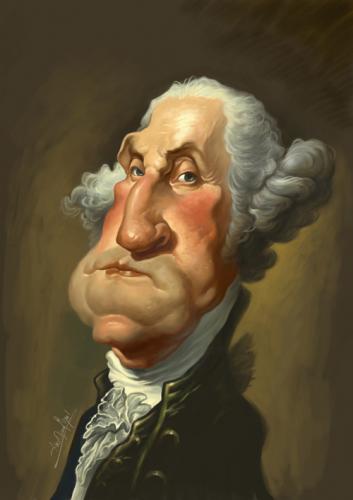
George Washington, his cabinet, and Congress set about the task of helping the infant country endure in the period following ratification. This Critical Period of U.S. history saw the development and implementation of the structure and function of government as well as the growth of political parties. Differing political opinions as well as both foreign and domestic events would challenge the country's leaders and test the validity of the new government.
Tuesday, October 19, 2010
The Constitution

What is the Constitution that sets the framework of our government today? Why was it written and who was it written for in 1787? Did it protect any particular group in society? Does it embody the ideals of the revolutionary period? Who supported it and who did not? All of these are key to understanding our country's most crucial document. Discuss below.
Federalists v. Antifedaeralists and differences between Articles and Constitution
Thursday, October 07, 2010
Tuesday, September 28, 2010
Evolution of the Revolution
 Olive Branch Petition: Read the document and answer the questions at the end. Consider the date and what is says about colonial sentiment towards Britain.
Tuesday, September 21, 2010
Slavery in the New World
Check out the video below and peruse the links to gain insight into the slave trade and the establishment of slavery in the New World.
http://0.tqn.com/d/africanhistory/1/0/6/M/SlaveryTable002.jpg
http://0.tqn.com/d/africanhistory/1/0/7/M/TriangleTrade001.jpg
http://www.pbs.org/wgbh/aia/part1/1narr4.html
http://www.bbc.co.uk/history/british/empire_seapower/barbados_01.shtml
http://uncpress.unc.edu/browse/page/308
http://en.wikipedia.org/wiki/Haitian_Revolution
Lecture 21: New World Slavery from Steven Volk on Vimeo.
http://0.tqn.com/d/africanhistory/1/0/6/M/SlaveryTable002.jpg

http://0.tqn.com/d/africanhistory/1/0/7/M/TriangleTrade001.jpg

http://www.pbs.org/wgbh/aia/part1/1narr4.html
http://www.bbc.co.uk/history/british/empire_seapower/barbados_01.shtml
http://uncpress.unc.edu/browse/page/308
http://en.wikipedia.org/wiki/Haitian_Revolution
Thursday, September 02, 2010
Summer Reading

The American Revolution: A History
by: Gordon Wood
Complete a book review and take approproate notes about the history of the American Revolution.
Here is a link to buy the book online: http://www.amazon.com/American-Revolution-History-Library-Chronicles/dp/0812970411
Friday, April 16, 2010
Deciding to use the Atomic Bomb

Using the links below you must develop a 1-2 page analysis of the government's decision to use atomic weapons on Japan. In your typed paper please answer the following:
How was the bomb developed?
Who is responsible for the use of these weapons?
What was the aftermath of using these weapons?
What lessons should we learn from this event?
http://www.history.army.mil/books/70-7_23.htm
http://www.dannen.com/decision/index.html
Perhaps the best set of links can be found here:
http://www.trumanlibrary.org/whistlestop/study_collections/bomb/large/index.php
Subscribe to:
Posts (Atom)