Hello and Welcome to the Summer Assignment Post. Sorry it took some time to get this up. PLEASE CHECK IN BY LEAVING YOUR NAME IN THE COMMENTS SECTION OF THIS POST SO I KNOW IF THERE IS ANYBODY MISSING THIS INFO! Here are your assignments:
1. Read Pageant through Reconstruction to refamiliarize yourself with the history. Fill in any big holes in your notes from last year as you go.
2. We will be nominating 5 people for the U.S. History Hall of Fame from the first part of American history. That said, you will choose two people from pre-Columbian times through Reconstruction. They can be ANYONE you have studied who has impacted American history. Write a one page nomination for each person you choose. Include a brief background of their lives, their contributions to society, and the major reasons they deserve to be in the HoF. Take time to carefully consider all of the people who impacted America during this time frame. Be creative. Do some research. This can be extremely insightful and, dare I say, fun if you give it some real thought.
3. From the time frame listed above: Pick ONE Supreme Court Case , ONE important presidential decision, and ONE major event and create a 5-10 page powerpoint on the subject. Include background, description, and significance slides. You should also have at least one slide that describes the influence the subject has on modern day America.
All questions, comments and concerns can be added to the comments section below.

Thursday, July 10, 2008
Tuesday, June 17, 2008
WELCOME TO APUSH 2008-2009

This site is a resource that we will utilize for APUSH. Any questions, comments or concerns may be voiced in the comments section below. Congratulations on choosing the class and good luck on your summer assignments!
-J
p.s. A fond farewell to this year's class. It was a pleasure to have you this past school year.
Tuesday, May 27, 2008
www.zamzar.com
This site can be very useful for teachers and students alike. It allows you to convert any video from YoutTube GoogleVideo etc... and download it as a media file onto your own personal computer. The directions are simple.
1. Cut and paste the URL of the video you wish to obtain from your web browser
2. Paste the url into the "step 1" bar on Zamzar's front page.
3. Follow the 4 steps listed.
4. You will recieve an email shortly after you do this. Follow the link in the email. You will be directed to a page with another link on it. That link is your media file. Follow the directions on the page to download your video.
5. You can insert this video into any powerpoint etc...
This is an extremely useful tool. I suggest that you use it if you plan on using a powerpoint or video.
WWW.ZAMZAR.COM
1. Cut and paste the URL of the video you wish to obtain from your web browser
2. Paste the url into the "step 1" bar on Zamzar's front page.
3. Follow the 4 steps listed.
4. You will recieve an email shortly after you do this. Follow the link in the email. You will be directed to a page with another link on it. That link is your media file. Follow the directions on the page to download your video.
5. You can insert this video into any powerpoint etc...
This is an extremely useful tool. I suggest that you use it if you plan on using a powerpoint or video.
WWW.ZAMZAR.COM
Thursday, May 15, 2008

Thursday, May 08, 2008
Test Day
So it is finally here. I know that it can be a scary thing to think about, but I'd like you all to know that you are all brilliant thinkers who should have great confidence in yourselves. Take your time to study. Again, at this point I suggest re-reading sections of Pageant. Have a game plan for your essays and don't dwell on missed multiple choices. I am proud of how far all of you have come and it has been a pleasure teaching you so far. The test will be over at this time tomorrow and you will be able to relax a bit. Here is my advice in its most basic form:
1. Study by reading... you have already done most of the work, don't reinvent the wheel!
2. Relax your mind... get a good night's sleep. Breakfast is on me at 7:00 sharp at Smith's. Don't be late!
3. Have confidence. You are all smart people but there are plenty of those out there. What I enjoy and admire most about you all is that you are all unique and interesting people!
4. You will be fine. Trust me.
See you at 7. Please try to make it to breakfast as best as you can.
-J
1. Study by reading... you have already done most of the work, don't reinvent the wheel!
2. Relax your mind... get a good night's sleep. Breakfast is on me at 7:00 sharp at Smith's. Don't be late!
3. Have confidence. You are all smart people but there are plenty of those out there. What I enjoy and admire most about you all is that you are all unique and interesting people!
4. You will be fine. Trust me.
See you at 7. Please try to make it to breakfast as best as you can.
-J
Thursday, May 01, 2008
Monday, April 28, 2008
The Presidency and the Military
The Truman Administration, 1945-1953
As soon as the war came to an end, the United States began to reduce its armed forces, undertaking what amounted to a unilateral disarmament, but this process did not go as far as it had after most other wars. The nation was committed to occupations in Germany and Japan. Wartime agreements meant that the Soviet Union, Great Britain, and France shared the burden in Germany, but the United States became the sole occupying power in Japan, a reflection of its predominant role in the Pacific war. The necessity to occupy the defeated nations began the process that led to the maintenance of extensive armed forces during peacetime, but other influences, especially widespread instability in Europe and Asia, eventually forced the United States to make expenditures on military requirements in amounts unheard of in the past.
President Harry S. Truman recognized the need to revise obsolete national security legislation and spearheaded the unification of the armed forces that took place between 1947 and 1949. World War II confirmed one of the most important aspects of modern warfare--the need for careful coordination of land, sea, and air assets to cope with the complexity of military activity. The National Security Act of 1947 created the National Security Council (NSC), bringing together the principal officials charged with the conduct of national security affairs. After consulting the NSC, the president was empowered to set basic national policy and strategy. The law also created the Central Intelligence Agency (CIA) and the Office of Secretary of Defense to provide overall direction, and it made the air force an independent service, designating three service secretaries to lead the army, navy, and air force. The Joint Chiefs of Staff was formalized to provide a forum for interservice negotiations, but the legislation did not authorize a chair for the group of uniformed service chiefs. Experience soon showed that the new National Military Establishment did not provide sufficient leadership. Amendments in 1949 created the Department of Defense, providing the secretary of defense with an augmented staff and converting the three independent services into constituent departments of the larger organization. A chairman was provided for the JCS to enhance its ability to assist in coordinating defense matters. Only minor changes have been made since 1949. These arrangements did not fully integrate the services, but they strengthened the hand of the president in providing direction for the large peacetime forces that served at home and around the world.
This presidential capability was essential for the conduct of the cold war. At the end of World War II, only two great powers remained, the United States in the Americas and the Soviet Union in Eurasia. The two global struggles had destroyed all others, including Germany, Great Britain, France, and Japan. The bipolarity of international power led rapidly to a confrontation over the occupation of the power vacuums that existed at the extremities of Eurasia where the fighting had taken place. The United States strongly objected to Soviet measures that it deemed were intended eventually to establish Soviet domination of Eurasia, particularly the creation of satellite states in Eastern Europe. The Russians offered a parallel justification for their opposition to a continuing U. S. presence, the claim that this activity was part of a U. S. imperialist scheme to crush international socialism and create an imperium in Europe and Asia. The confrontation of Soviet and U. S. power ensured that the world would remain an armed camp for the indefinite future as the two superpowers maintained extraordinary peacetime military formations to support their diplomacy.
Following the Wilsonian formula, the United States had initially expected to exert its influence in world politics primarily through the United Nations, but the new international organization proved incapable of resolving most of the problems of the cold war, especially questions of peace and war. For the UN to function efficiently as a peacekeeping agency, there must be unanimity among the great powers who sit on the Security Council as permanent members. These countries each possess the right to veto contemplated actions. The inability of the Soviets and the Americans to settle their differences meant that the United States had to look to other means of intervening extensively in world politics.
President Truman provided the impetus for the development of U. S. policy and strategy to deal with the Soviet threat. As the stirring events of the early postwar years clarified the stakes of the cold war, Secretary of State George Marshall (1947-1949) and his successor, Dean Acheson (1949-1953), arrived at a policy of containment, put forth in July 1947 by Foreign Service officer George F. Kennan. The United States would use its power, including its military strength, to curb Soviet expansion in crucial regions of the world. To fulfill this policy, the nation adopted a strategy of nuclear deterrence, relying primarily upon its initial monopoly of nuclear weapons and its later superiority. These concepts would guide the actions of the international coalition organized by the United States, otherwise known as the free world or as the western bloc of nations. Bilateral or multilateral regional defense agreements would coordinate the endeavors of the anti-Soviet nations. Although President Truman and his successors were unable to work through a universal and permanent alliance to cope with plenary postwar instability, they remained faithful to fundamental Wilsonian revolution in national security affairs--willingness to intervene in Europe and Asia through various defense arrangements that tied together the anti-Soviet nations and to maintain huge, professional, war-fighting armed services to back its activities.
Truman and his successors forged a national consensus in support of containment and nuclear deterrence. This accordance was reflected in bipartisan cooperation in national security affairs, a broad acceptance of the notion that politics ended at the water's edge. Bipartisanship amounted to a truce in executive-legislative struggles over national security matters, although it also entailed close consultation between the White House and Capitol Hill. This situation assured the dominance of the executive in setting foreign policy and defense policy and in guiding the national security agencies, including the Department of Defense, although Congress made constructive contributions. In other words, the exigencies of the cold war strengthened the ability of the president to direct national security affairs as the nation worked its way through many international crises.
The fundamental security arrangements for Europe were worked out during the period 1947-1950. Besides maintaining its own armed forces, the United States contributed extensive economic assistance to rebuild the shattered economies of Western Europe by means of the European Recovery Program, better known as the Marshall Plan and launched in mid-1947. It also sent considerable military assistance, which was eventually rationalized by the workings of a collective defense agreement, the North Atlantic Treaty Organization (NATO), ratified in July 1949. General Eisenhower became the first NATO commander, lending his enormous prestige to the keystone of cold war defense policy. A collective defense arrangement for the Americas, the Rio Pact of 1947 (Inter-American Treaty of Reciprocal Assistance), matured the principle of hemispheric collective defense against aggressors in Europe and Asia. Soviet policy came to be equated with that of the Nazis, a development that helped to assure continuing public support for containment in Europe.
When the Korean War broke out in 1950, it had the effect of confirming the existence of the cold war and hardening the nation's commitment to containment and nuclear deterrence. The North Korean invasion of South Korea in June across the thirty-eighth parallel evoked a swift presidential response. Truman dispatched the few U. S. forces then available to support the South Korean Army and quickly obtained United Nations support for a "police action" to preserve the sovereignty of South Korea. This step became possible because the Soviet Union was then boycotting the UN as a means of expressing its annoyance over the failure of that organization to recognize the Communist government that had seized power in China early in 1949.
The onset of the Korean conflict strengthened the cogency of an important top-secret document, National Security Council Paper Number 68 (NSC-68), which set basic U. S. policy and strategy for the cold war. It reflected the judgment that the Soviet Union represented a growing long-term threat to national security. Considerable increases in the military capabilities of the United States and its allies were necessary to counter the Soviet buildup, and Congress proved willing to provide the necessary appropriations.
The mobilization for the Korean War accomplished the expansion of the U. S. armed forces contemplated in NSC-68. For example, the army increased in strength from just under 600,000 troops to 1.5 million and from ten divisions to twenty divisions. The air force growth was even more impressive, from forty-eight groups and about 400,000 personnel to ninety-three wings and close to 1 million people.
Once again, the requirements of the cold war strengthened the hand of the executive branch. Truman acted on his own, deciding against asking for a grant of authority from Congress. He made use of the Selective Service System and call-ups of reserve and National Guard units to provide manpower for the war and used the new institutions created to manage national defense, such as the Department of Defense and the Joint Chiefs of Staff, to conduct a limited war in East Asia.
The Korean War produced an extraordinary challenge to the president's power as commander in chief. General Douglas MacArthur, the UN commander, managed to halt the North Korean offensive by September 1950 and to turn the tables, routing the enemy and regaining the thirty-eighth parallel. He then advocated continuing operations to oust the Communist Kim II Sung in North Korea and to unify the country under the staunch non-Communist Syngman Rhee. Truman and the JCS were dubious, worried about possible intervention by mainland China, Communist Mao Zedung having taken control of that nation in 1949. MacArthur believed that he could frustrate any such effort by the use of air power. After receiving the necessary authority in a somewhat ambiguous UN resolution, MacArthur moved north, penetrating to the Yalu River valley that separated Korea and Manchuria. In November, Chinese forces intervened in great strength, forcing MacArthur to withdraw below the thirty-eighth parallel. In response, the general wanted to escalate his efforts, but Truman and the JCS opted for limited war, deciding to restore the position at the thirty-eighth parallel but not to conquer North Korea.
MacArthur then indulged in numerous insubordinate acts, arguing that limited war was no substitute for victory, a course that eventually forced the president to relieve him in April 1951. General Matthew B. Ridgway took his place, and MacArthur returned to the United States. Despite a great outpouring of sympathy from the American public, his effort to reverse national policy faded away, most Americans accepting the judgment of General Omar Bradley, chairman of the JCS, that MacArthur's call for an expanded struggle was the "wrong war, at the wrong place, at the wrong time, and with the wrong enemy." The UN Command was left to regain positions near the thirty-eighth parallel and then to wage a difficult war of attrition. Negotiations designed to end the conflict began in October 1951 but dragged on until July 1953, although the UN force had gained its limited objective much earlier, a stabilized front roughly along the thirty-eighth parallel.
As the Korean War ran its course, the Truman administration and its successor, that of General Dwight D. Eisenhower, constructed a net of security arrangements in East Asia that roughly paralleled those for Western Europe and the Americas. Bilateral treaties were negotiated with Japan, South Korea, Taiwan, and the Philippines. The multilateral ANZUS Pact of 1951 with Australia and New Zealand extended protection to the southwest Pacific. Eisenhower's energetic secretary of state, John Foster Dulles, spearheaded the formation of the Southeast Asia Treaty Organization in September 1954, which extended the umbrella of collective defense to the mainland.
The Eisenhower Administration, 1953-1961
Despite the eventual success of Truman's decision to wage a limited war in Korea, the struggle became unpopular with the American people, and it was part of the political change in the United States that swept General Eisenhower, the Republican candidate, to victory in the election of 1952. He exploited distaste for the war by promising, if elected, to "go to Korea." After taking office, he did so and soon made it known that the United States might employ nuclear weapons in Korea. This initiative finally led to a truce, and the war came to an end in August 1953.
The outcome in Korea permitted Eisenhower to introduce an adjustment in defense policy known as the New Look. Seeking to reduce the costs of the cold war, he decided to strengthen the nuclear deterrent and reduce conventional forces, providing the United States with what Dulles called the capacity for massive retaliation in the event of untoward Soviet incursions on the free world. This approach presumed that the allies of the United States would emphasize conventional forces to deal with low- or mid-intensity conflicts.
Although the New Look lowered costs because weapons of mass destruction were relatively less expensive than others, it had a disadvantage. Critics argued that it reduced the nation's options in dealing with any scenario other than a high-intensity war with the Soviet Union, especially limited wars along the Eurasian rim. Proponents of preparations for land warfare argued that it gave undue emphasis to the air force and the navy and neglected the army.
President Eisenhower remained faithful to the fundamental policy and strategy for the cold war set by the Truman administration, although he made some attempts to reopen negotiations with the Soviet Union. To increase the ability to monitor nuclear armaments, he proposed an "open skies" plan that would have permitted aerial observation (overflights) of both the United States and the Soviet Union. The Soviets did not accept this gambit, but the United States undertook clandestine overflights of Soviet territory, using a high-altitude aircraft, the U-2, for this purpose, flying from locations in the Middle East. Eisenhower also sponsored an "atoms for peace" plan at the United Nations in December 1953, but this initiative also failed to gain Soviet support.
Eisenhower tinkered with the organization of the national security agencies, seeking to systematize the ad hoc procedures and to fill missing links that he thought characterized the existing arrangements. In 1953 and 1958 he took actions that strengthened the hands of the secretary of defense and the JCS. The service secretaries were removed from the chain of command, so that responsibility ran directly from the president to the secretary of defense to the commanders of the "unified" (multiservice) commands and the "specified" (single-service) commands, such as the Strategic Air Command.
Throughout the Eisenhower years the nation dealt with a series of challenges along accepted cold war lines. Some of these crises required deployment of military forces to the field. The failure of France to reassert its control of Indochina during the first Indochinese war (1946-1954) led to increasing U.S. support for a non-Communist government in South Vietnam. A Communist Chinese threat in 1955 to the offshore islands of Quemoy, Matsu, and the Pescadores led to increased support for the non-Communist regime of Chiang Kai-shek on Formosa. President Eisenhower strongly opposed the efforts of Great Britain, France, and Israel to remove Abdel Gamal Nasser from power in Egypt during 1956 after the Egyptian leader seized the Suez Canal, a renewal of the Arab-Israeli conflict that stemmed from the Israeli War of Independence (1948-1949). A landing force of fourteen thousand soldiers and marines was sent into Lebanon in July 1958 to help stabilize the local government. In 1959, Dulles sponsored a collective security arrangement, the Central Treaty Organization (CENTO), to replace the Baghdad Pact of 1955 in the Middle East, but it soon fell into disuse.
Of great importance during the Eisenhower years was the strong U.S. reaction to the efforts of the Russian leader Nikita Khrushchev to resolve the question of Germany. Eisenhower rebuffed threats to end the four-power occupation of Berlin. A summit conference at Camp David, Maryland, in September 1959, arranged to discuss this question, came to naught, because in May 1960, the Soviets shot down a U-2 that was conducting a photographic mission deep within Soviet territory. The controversy over Berlin strengthened the U.S. commitment to the NATO alliance as a means of containing Soviet threats to Western Europe.
Kennedy and Johnson, 1961-1969
When President John F. Kennedy took office in 1961, he undertook to execute various campaign pledges that promised more aggressive and efficient conduct of the cold war. At the head of his agenda was a commitment to eliminate a "missile gap" that intelligence experts alleged had opened during the 1950s, when the Soviets were able to beat the Americans to the punch with the launching of the Sputnik orbiter in 1957. Another prime concern was opposition to the regime of Fidel Castro in Cuba, which had moved rapidly into the Communist bloc of nations. Most important, perhaps, was Kennedy's more general commitment to "flexible response," a departure from Eisenhower's New Look.
Kennedy encountered several setbacks during his early months in office. One was the failure of the Bay of Pigs invasion in Cuba in April by anti-Castro elements; another was the construction of the Berlin Wall in August. He could do little about the Bay of Pigs fiasco, but he responded to the continuing contest over Berlin by mobilizing a considerable number of reservists and strengthening the U.S. commitment to defend the stake of western nations in Berlin.
Of greater long-term significance were the strategic adjustments spearheaded by Secretary of Defense Robert McNamara. He asserted civilian leadership strongly in the Pentagon, alienating many in the uniformed services by contriving two important changes. One was the adoption of flexible response, which was intended to improve the nation's ability to conduct limited wars. Another was the acceptance of a new guideline for the deployment of the nuclear deterrent, the concept of "assured destruction." McNamara eventually recognized that it was impossible to maintain a superior nuclear deterrent indefinitely. His nuclear planning concentrated on the ability to make a retaliatory strike against the Soviet Union that would wreak unacceptable damage. The other side of this departure was acceptance of a comparable Soviet capability, a concession that made "mutual assured destruction" (MAD) possible. To stabilize the opposed nuclear arsenals, McNamara engineered a shift in nuclear targeting from enemy military installations (counterforce targeting) to centers of enemy population (countervalue or countercity targeting). This approach required rejection of plans to develop effective antiballistic missile (ABM) capabilities. Such systems would destabilize the nuclear equilibrium because they would protect civilian populations. Mutual assured destruction meant that until effective arms control and disarmament measures became feasible, each side would hold the other's population hostage. Although critics argued that MAD was immoral because of the hostage aspect, a deep and stable nuclear deterrent resulted from this adjustment. It was the result of the growing recognition on all sides that the international community must avoid a nuclear war.
McNamara moved aggressively to create a diversified nuclear capability based on a triad of delivery systems--strategic bombers, nuclear submarines, and intercontinental ballistic missiles (ICBMs)--a force sufficient to achieve the desired deterrence. New developments in the nuclear field, both qualitative and quantitative in nature, particularly the introduction of multiple, independently targetable reentry vehicles (MIRVs), complicated the process of maintaining mutual assured destruction, creating a new agenda for arms control negotiators.
Efforts to achieve stability in the nuclear arms balance presaged attempts to negotiate effective nuclear arms control and disarmament, but the first significant steps in this direction did not come until after the two superpowers became involved in the most dangerous of cold war encounters. In 1962, Khrushchev attempted to alter the strategic balance by installing nuclear missiles in Cuba. When this endeavor was discovered, Kennedy took decisive action, instituting a naval blockade to prevent the shipment of missiles to Cuba. Khrushchev decided not to attempt to run this blockade. The crisis came to an end when Khrushchev agreed to withdraw the missiles already in Cuba in return for a U.S. agreement not to attack Castro and to remove some obsolescent missiles located in Turkey that were aimed at the Soviet Union.
There followed a certain relaxation in EastWest tensions that made possible a U. S.-Soviet test ban treaty. This agreement of August 1963 limited nuclear testing to underground sites, ending extensive pollution of the atmosphere and the seas, but this promising start did not immediately lead to other agreements because of the growing U. S. involvement in Indochina.
The hallmark of U.S. national security policies between 1945 and 1965 was continuity. Presidential leadership, initially supplied by Truman, consolidated and refined the policy of containment, the strategy of nuclear deterrence, and the maintenance of many political-military treaties and agreements with other nations to maintain a broad front against the Soviet bloc. Although Presidents Eisenhower and Kennedy introduced various modifications, such as the New Look and flexible response, they did so to improve rather than to alter basic national security commitments.
Assuming the presidency when Kennedy was assassinated in 1963, Lyndon B. Johnson found himself forced to concentrate on a growing crisis in Indochina. In mid-1950, during the Korean War, Truman had authorized military assistance in an unsuccessful effort to help France maintain its authority in Indochina. In 1954, after the partition of Indochina into three states--Laos, Cambodia, and Vietnam--and the further separation of Vietnam into a Communist state north of the seventeenth parallel and a non-Communist state south of that line, Eisenhower and then Kennedy sent assistance to the regime of Ngo Dinh Diem in South Vietnam to help it resist a growing insurgency within the country. The South Vietnamese dissidents received considerable support from the neighboring Communist regime in North Vietnam led by Ho Chi Minh. The Military Assistance Advisory Group (MAAG) eventually evolved into a more formal organization--the Military Assistance Command, Vietnam (MACV)--which sought to improve the efforts of the Army of the Republic of Vietnam (ARVN) to defeat the insurgents, who eventually called themselves the National Liberation Front (NLF), but were more commonly referred to as the Vietcong. The corrupt regime in Saigon, capital of South Vietnam, proved unequal to this task. Diem was assassinated in 1963, but his successors were not any more effective. By 1965 a Vietcong victory seemed quite possible.
After Johnson was elected in his own right in 1964, he decided to move from assistance to active military intervention in South Vietnam, a step deemed necessary because of indications that the Vietcong might soon achieve victory. In August 1964, after some confused naval actions in the Gulf of Tonkin, Johnson obtained congressional assent to commit U.S. armed forces in South Vietnam. This intervention was based on a notion known as the "domino theory" popularized by Eisenhower. It held that the Communist bloc would support "wars of national liberation" in Southeast Asia and elsewhere to enlarge itself at the expense of the free world. If this enterprise succeeded in Indochina, it would automatically lead to the loss of other important states in the region, including Thailand, Burma, the Philippines, Malaysia, and Indonesia. The fundamental war aim of the Vietnam conflict was to prevent the fall of South Vietnam, the most important of the new Indochinese states, and thereby counter the strategy of the war of national liberation in Southeast Asia.
A limiting factor in Johnson's calculations was Communist China. Subscribing to the notion that the Sino-Soviet bloc was tightly organized and controlled from Moscow, the president wanted to stop its movement into Southeast Asia but at the same time avoid Chinese intervention of the type that had occurred in Korea and led to the political destruction of President Truman. This consideration led to constraints on operations in Indochina that might trigger Chinese intervention, especially attacks on North Vietnam or Laos and Cambodia, the latter two states bordering on South Vietnam and through which ran the principal line of communications from North Vietnam to the NLF in South Vietnam.
The U.S. armed intervention in South Vietnam began early in 1965, when the first ground troops landed and took part in attacks on the Vietcong and bombing attacks were first directed against targets in North Vietnam. Johnson energetically augmented the initial commitment; at its peak in 1969, U.S. forces in South Vietnam numbered almost 550,000. The limits imposed on U.S. action in Vietnam led the MACV commander, General William Westmoreland, to devote U.S. troops to search-and-destroy operations against insurgents and North Vietnamese regulars while the ARVN undertook "pacification," the task of gaining the loyalty of the people in areas freed from Vietcong control. Meanwhile North Vietnam was subjected to bombing.
Search-and-destroy missions were usually successful, and the bombing caused considerable damage, but the insurgency sustained itself. The North Vietnamese people endured the bombing, and the Vietcong avoided decisive defeat by fleeing into Cambodia and Laos. U.S. troops were unable to interdict the movement of reinforcements, supplies, and equipment from North Vietnam to the insurgents in the south, much of it along the Ho Chi Minh trail through Laos and Cambodia. ARVN proved exceptionally ineffective in its attempts to pacify the countryside.
President Johnson spurred the buildup in South Vietnam during the years 1965-1968 despite growing indications that an early victory was unlikely, so that the struggle became "Johnson's war." An antiwar movement originally based on college and university campuses expanded as the Vietnam quagmire led to large casualty lists. Gradually, influential legislators, such as J. William Fulbright, chairman of the Senate Foreign Relations Committee, joined the opposition to the war. Many people who did not agree with the claim that the war was both immoral and illegal eventually opposed the struggle on pragmatic grounds, taking the view that the benefits were not commensurate with the costs. Of particular importance was growing opposition to Selective Service, as thousands of young men fled the country rather than accept induction.
In January 1968, during the Tet (lunar new year) holidays, the Vietcong abandoned its usual strategy of avoiding battle and attacked a large number of urban areas throughout South Vietnam, hoping to score a decisive victory. These were surprise operations, but MACV and ARVN soon turned the tables and scored a smashing triumph, so much so that the insurgency was crippled for several years. Its combat effectiveness had to be rebuilt almost from scratch. The image of the Tet offensive that the mass media conveyed to the U.S. people greatly increased antiwar sentiment. Although the coverage obscured the extent of the Vietcong defeat (thirty-two thousand dead), it was difficult for anyone in the administration to argue that the war was near an end, especially after General Westmoreland asked for more than 200,000 reinforcements and indicated that the war would go on for several more years.
When a maverick contender for the Democratic presidential nomination, Senator Eugene McCarthy of Minnesota, ran well in the New Hampshire primary early in 1968, and Senator Robert F. Kennedy of New York also became a candidate, President Johnson decided to end the U.S. intervention in Vietnam. He announced that he would not seek reelection and that he would inaugurate negotiations in the hope of reaching a settlement. This surprising decision had important political consequences. Johnson's discredited policies helped Richard M. Nixon to defeat the Democratic nominee, Vice-President Hubert Humphrey, who was forced to defend Johnson's unpopular war.
From Nixon to Carter, 1969-1981
President Nixon came into office with a mandate to gain "peace with honor" in Vietnam and with a plan to bring about a remarkable reorientation of U.S. foreign policy. Aided by his national security adviser, Henry Kissinger, he decided to attempt nothing less than an end to the cold war, beginning with efforts to improve relations with China and to negotiate arms control issues with the Soviet Union. Once again, in a moment of crisis, presidential leadership in national security affairs asserted itself. Nixon, however, recognized that his new departures could not move very far until he liquidated the commitment in Vietnam. Nixon settled on an approach to the war that became known as Vietnamization. The United States would gradually reduce its commitment while South Vietnam, continuing to receive U.S. assistance, gained the ability to defend itself. Meanwhile, the United States would attempt to negotiate a reasonable end to the war.
North Vietnam, however, scenting a complete victory, refused to conduct serious negotiations, and the Saigon regime headed by General Nguyen Van Thieu made little progress in establishing its legitimacy, despite massive aid from the United States. Nevertheless, the United States began to withdraw troops in the summer of 1969 and continued to do so until by the end of 1972 only a small contingent remained in South Vietnam. Meanwhile the war continued. When Communist China became deeply involved in its cultural revolution, a violent internal upheaval that led to the overthrow of the Maoists, Nixon felt able to authorize incursions into Cambodia in 1970 and Laos in 1971, intended both to interfere with enemy command posts and communications and to encourage negotiations, but these operations did not succeed. In 1972, Nixon authorized a massive air attack on the north, to help South Vietnam resist a large-scale offensive launched by the insurgency, which had finally recovered from the Tet losses.
North Vietnam finally decided to negotiate, and eventually a cease-fire agreement was reached in January 1973, although not until the Hanoi-Haiphong area was subjected to a destructive air campaign during the Christmas season of 1972. The U.S. troop withdrawal was completed in March 1973. The American people supported the policy of Vietnamization and reluctantly accepted the long delay in liquidating the U.S. presence in Vietnam. Nixon gravely weakened the peace movement when he set up a lottery system to determine draft quotas and later adopted a plan for an all-volunteer army. The election of 1972 resulted in a landslide for Nixon over the Democratic candidate, Senator George McGovern of South Dakota, a leading opponent of the war.
The settlement did not preserve South Vietnam. The January agreement provided for U.S. withdrawal in sixty days and for steps to establish a new government for Vietnam, but it did not mandate the withdrawal of North Vietnamese troops from the south. Nixon promised to aid South Vietnam if the North Vietnamese violated the terms of the peace settlement. The president hoped to pursue the initiatives begun in 1972 to improve relations with both Moscow and Peking, but the Watergate affair soon engulfed the nation, eventually forcing his resignation. His successor, Gerald Ford, was left to preserve Nixon's remarkable initiatives in the field of national security.
Before his downfall, Nixon completed the Strategic Arms Limitation Talks (SALT I) and reached important arms control agreements with the Soviet Union, resuming the initiative that had produced the test-ban treaty in 1963. The ABM treaty, signed in Moscow in 1972, limited each country to two ABM sites with no more than a hundred missiles each, which helped to stabilize the nuclear balance by preserving mutual assured destruction. An interim agreement established ceilings on the number of intercontinental ballistic missiles (ICBMs) and submarine launched ballistic missiles (SLBMs) that could be maintained by each side. The arrangement, however, did not cover U.S. strategic bombers or MIRVs. In 1974, President Ford and Soviet leader Leonid Brezhnev made further progress, accepting the Vladivostok Accords, which established a ceiling on the number of nuclear delivery systems. The Soviet Union and the United States could maintain a total of 2,400 systems, including 1,320 MIRV weapons. This agreement set the stage for another round of talks, the SALT II negotiations.
Despite the resumption of serious arms control negotiations, the cold war truce in executive-legislative conflict over national security matters fell apart. Most important was the increasing unwillingness of Congress to maintain the military services at levels proposed by the executive branch. The armed services declined in numbers from about 3.4 million at the height of the Vietnam conflict in 1968 to a little over 2 million in 1975. When North Vietnam moved against South Vietnam, Congress refused to authorize emergency assistance for the Saigon government, which finally fell in April 1975. In 1973, Congress passed the War Powers Act, which required the executive branch to obtain legislative approval of the use of troops in overseas combat within sixty days of the commitment. Meanwhile, Congress greatly enhanced its ability to debate national security matters with the executive branch, mainly by increasing the professional staffs attached to important congressional committees and by augmenting its investigative activity, including the functions of the General Accounting Office.
Presidents Ford and Jimmy Carter (1977-1981) generally supported the Nixonian attempt to achieve détente with the Russians and the Chinese. Both encountered the post-Vietnam syndrome, a general public desire to limit U.S. commitments abroad and to impose limits on the defense establishment, discredited by the setback in Vietnam. Carter's most important achievement was the SALT II Treaty, signed with Brezhnev in June 1979, which imposed new limits on all types of delivery systems and limited the future development of ICBMs and cruise missiles. Unfortunately for Carter, strong resistance to the SALT II Treaty, especially following the seizure of U.S. hostages in Iran after the fall of the shah and the Russian intervention in Afghanistan to shore up a pro-Soviet regime, forced suspension of efforts to obtain ratification of the treaty.
The Iranian and Afghanistan crises caused Carter to abandon his earlier emphasis on détente and to assume a more energetic anti-Soviet policy. Among other measures, the administration departed somewhat from countervalue targeting, broadening its capacity to wage nuclear war. Efforts were also made to augment the available weapons systems, including a new class of nuclear submarines armed with MIRV missiles and a new ICBM, the MX missile. To deal with possible crises along the Eurasian rim, such as those in Iran and Afghanistan, Carter formed the Rapid Deployment Joint Task Force. He also authorized an attempt to rescue the American hostages in Iran, but the expedition was a failure.
Reagan and Bush, 1981-1992
Carter's change of policy did not prevent his defeat in the presidential election of 1980. The Republican candidate, Ronald Reagan, adopted a strong anti-Soviet theme, calling for increased defense spending to assure modernization and readiness. After his election, Reagan referred to the Soviet Union as an "evil empire" and pursued an extensive program of rearmament. He also expanded U.S. commitments overseas, seeking to move beyond the Vietnam syndrome, which had interfered with foreign policy initiatives.
Reagan's national security policies reflected a return to the high cold war mentality, which meant renewed emphasis on containment and deterrence, an end to arms control negotiations and other aspects of détente as practiced during the Nixon-Ford-Carter era, and a renewed emphasis on NATO and other arrangements for the defense of the free world. Reagan also proved willing to commit U.S. troops to threatened regions, sending troops to Lebanon and to Grenada. The first expedition, in August 1982, was marred by the loss of more than two hundred marines in an explosion in October near Beirut. The Grenada operation, also in October, was successful if inefficiently managed.
Reagan's initial policies assumed a continuing and growing threat from the Communist bloc of nations, an estimate of the situation that appeared less and less convincing after Mikhail Gorbachev assumed power in the Soviet Union and gradually launched his twin policies of glasnost (openness) and perestroika (structural reform). Gorbachev's extraordinary domestic initiatives revealed that the Soviet Union, far from growing in strength, was in serious economic difficulty. To permit concentration of resources on domestic problems, Gorbachev launched diplomatic initiatives that centered on arms control negotiations with the West. During his second term in office (1985-1989), Reagan responded to these initiatives and permitted resumption of the arms control process that had begun during the years of détente.
Gorbachev's attempts to reform the Soviet Union at length produced an unexpected and dramatic reaction in Eastern Europe. One by one the satellite states overthrew their Communist governments and asserted their independence from the Soviet Union. The most important development was the reunification of the two German states, completed in 1990. In 1991 the Warsaw Pact was dissolved, vastly reducing the likelihood of an attack on the NATO countries. These developments meant an end to the cold war, validating the analysis that had led Nixon and Kissinger to their efforts to move toward more normal relations with the Communist bloc of nations. The reduction of the perceived Communist threat led to important departures in national security policy during the administration of President George Bush--a return to significant reductions in defense spending and a concentration of attention on political developments in the Third World, especially in areas of interest to the United States and its allies along the Eurasian rim.
None of these areas was of greater importance during the early 1990s than the Middle East, where continuing instability threatened to cut off access to essential supplies of oil. Hostility between the Arabs and the Israelis continued to unsettle the region, as did intraregional disputes, such as that between Iran and Iraq, which produced a long war between the two states during the 1980s.
When Iraq suddenly invaded Kuwait in August 1990 and threatened to invade Saudi Arabia, the Bush administration responded energetically, supporting an international naval blockade in the Persian Gulf and building up land, sea, and air assets in Saudi Arabia. When the Iraqi leader, Saddam Hussein, refused to withdraw from Kuwait despite concerted international pressure exerted through the United Nations, Bush obtained authority from both the United Nations and the Congress to use force. In January 1991, the coalition forces in Saudi Arabia struck at Iraq, first conducting a successful air attack on Iraqi communications and industry and then launching a surprise offensive on land that defeated a supposedly strong Iraqi army in a few days.
The short Gulf War was the first post-cold war international crisis. It demonstrated that unanimity among the great powers could produce effective collective action through the United Nations. Some dissidents suggested that the crisis might have been better resolved by peaceful methods, and others maintained that armed intervention, although successful in the short term, might ultimately prove counterproductive. For the moment, however, this reassertion of executive prerogative in national security affairs once again demonstrated the continuing importance of the presidency in deciding and guiding national security policies, although it also illustrated the significance of congressional participation in decision-making through close consultation and cooperation between the executive and legislative branches of government.
-- Trask, David F.
FURTHER READINGS
Bauer, K. Jack. The Mexican War (1974).
Bernardo, C. Joseph, and Eugene H. Bacon. American Military Policy: Its Development Since 1775 (1957).
Brodie, Bernard. Strategy in the Missile Age (1959).
Burns, James MacGregor. Roosevelt: The Soldier of Freedom, 1940-1945 (1970).
Coakley, Robert W. The Role of Federal Military Forces in Domestic Disorders, 1781-1878 (1988).
Coffman, Edward M. The War to End All Wars: The American Military Experience in World War I (1968).
Ekirch, Arthur E., Jr. The Civilian and the Military (1956).
Gaddis, John L. Strategies of Containment (1981).
Hagan, Kenneth J., ed. In Peace and War: Interpretations of American Naval History, 1775-1984 (1984).
Hagan, Kenneth J., and William R. Roberts. Against All Enemies: Interpretations of American Military History from Colonial Times to the Present (1986).
Haynes, Richard F. The Awesome Power: Harry S. Truman as Commander in Chief (1973).
Herring, George C. America's Longest War: The United States in Vietnam, 1950-1975 (1979).
Huntington, Samuel P. The Soldier and the State: The Theory and Politics of Civil-Military Relations (1957).
Kohn, Richard H. Eagle and Sword: The Federalists and the Creation of the Military Establishment (1975).
May, Ernest R., ed. The Ultimate Decision: The President as Commander in Chief (1960).
Millett, Allan R., and Peter Maslowski. For the Common Defense: A Military History of the United States of America (1984).
Millis, Walter. Arms and Men: A Study in American Military History (1956).
Rees, David. Korea: The Limited War (1964).
Schaffter, Dorothy, and Dorothy M. Mathews. The Powers of the President as Commander in Chief of the Army and Navy of the United States (1956).
Smith, J. Malcolm, and Stephen Jurika, Jr. The President and National Security: His Role as Commander in Chief (1972).
Stagg, J. C. A. Mr. Madison's War (1983).
Trask, David F. The War with Spain in 1898 (1981).
Weigley, Russell F. The American Way of War: A History of United States Military Strategy and Policy (1973).
Williams, T. Harry. Lincoln and His Generals (1952).
------. Americans at War: The Development of the American Military System (1960).
Source Citation: "The Presidency and the Military." Encyclopedia of the American Military. 3 vols. Charles Scribner's Sons, 1994. Reproduced in History Resource Center. Farmington Hills, MI: Gale. http://galenet.galegroup.com.ezproxy.bpl.org/servlet/HistRC/
Document Number: BT2318000008
As soon as the war came to an end, the United States began to reduce its armed forces, undertaking what amounted to a unilateral disarmament, but this process did not go as far as it had after most other wars. The nation was committed to occupations in Germany and Japan. Wartime agreements meant that the Soviet Union, Great Britain, and France shared the burden in Germany, but the United States became the sole occupying power in Japan, a reflection of its predominant role in the Pacific war. The necessity to occupy the defeated nations began the process that led to the maintenance of extensive armed forces during peacetime, but other influences, especially widespread instability in Europe and Asia, eventually forced the United States to make expenditures on military requirements in amounts unheard of in the past.
President Harry S. Truman recognized the need to revise obsolete national security legislation and spearheaded the unification of the armed forces that took place between 1947 and 1949. World War II confirmed one of the most important aspects of modern warfare--the need for careful coordination of land, sea, and air assets to cope with the complexity of military activity. The National Security Act of 1947 created the National Security Council (NSC), bringing together the principal officials charged with the conduct of national security affairs. After consulting the NSC, the president was empowered to set basic national policy and strategy. The law also created the Central Intelligence Agency (CIA) and the Office of Secretary of Defense to provide overall direction, and it made the air force an independent service, designating three service secretaries to lead the army, navy, and air force. The Joint Chiefs of Staff was formalized to provide a forum for interservice negotiations, but the legislation did not authorize a chair for the group of uniformed service chiefs. Experience soon showed that the new National Military Establishment did not provide sufficient leadership. Amendments in 1949 created the Department of Defense, providing the secretary of defense with an augmented staff and converting the three independent services into constituent departments of the larger organization. A chairman was provided for the JCS to enhance its ability to assist in coordinating defense matters. Only minor changes have been made since 1949. These arrangements did not fully integrate the services, but they strengthened the hand of the president in providing direction for the large peacetime forces that served at home and around the world.
This presidential capability was essential for the conduct of the cold war. At the end of World War II, only two great powers remained, the United States in the Americas and the Soviet Union in Eurasia. The two global struggles had destroyed all others, including Germany, Great Britain, France, and Japan. The bipolarity of international power led rapidly to a confrontation over the occupation of the power vacuums that existed at the extremities of Eurasia where the fighting had taken place. The United States strongly objected to Soviet measures that it deemed were intended eventually to establish Soviet domination of Eurasia, particularly the creation of satellite states in Eastern Europe. The Russians offered a parallel justification for their opposition to a continuing U. S. presence, the claim that this activity was part of a U. S. imperialist scheme to crush international socialism and create an imperium in Europe and Asia. The confrontation of Soviet and U. S. power ensured that the world would remain an armed camp for the indefinite future as the two superpowers maintained extraordinary peacetime military formations to support their diplomacy.
Following the Wilsonian formula, the United States had initially expected to exert its influence in world politics primarily through the United Nations, but the new international organization proved incapable of resolving most of the problems of the cold war, especially questions of peace and war. For the UN to function efficiently as a peacekeeping agency, there must be unanimity among the great powers who sit on the Security Council as permanent members. These countries each possess the right to veto contemplated actions. The inability of the Soviets and the Americans to settle their differences meant that the United States had to look to other means of intervening extensively in world politics.
President Truman provided the impetus for the development of U. S. policy and strategy to deal with the Soviet threat. As the stirring events of the early postwar years clarified the stakes of the cold war, Secretary of State George Marshall (1947-1949) and his successor, Dean Acheson (1949-1953), arrived at a policy of containment, put forth in July 1947 by Foreign Service officer George F. Kennan. The United States would use its power, including its military strength, to curb Soviet expansion in crucial regions of the world. To fulfill this policy, the nation adopted a strategy of nuclear deterrence, relying primarily upon its initial monopoly of nuclear weapons and its later superiority. These concepts would guide the actions of the international coalition organized by the United States, otherwise known as the free world or as the western bloc of nations. Bilateral or multilateral regional defense agreements would coordinate the endeavors of the anti-Soviet nations. Although President Truman and his successors were unable to work through a universal and permanent alliance to cope with plenary postwar instability, they remained faithful to fundamental Wilsonian revolution in national security affairs--willingness to intervene in Europe and Asia through various defense arrangements that tied together the anti-Soviet nations and to maintain huge, professional, war-fighting armed services to back its activities.
Truman and his successors forged a national consensus in support of containment and nuclear deterrence. This accordance was reflected in bipartisan cooperation in national security affairs, a broad acceptance of the notion that politics ended at the water's edge. Bipartisanship amounted to a truce in executive-legislative struggles over national security matters, although it also entailed close consultation between the White House and Capitol Hill. This situation assured the dominance of the executive in setting foreign policy and defense policy and in guiding the national security agencies, including the Department of Defense, although Congress made constructive contributions. In other words, the exigencies of the cold war strengthened the ability of the president to direct national security affairs as the nation worked its way through many international crises.
The fundamental security arrangements for Europe were worked out during the period 1947-1950. Besides maintaining its own armed forces, the United States contributed extensive economic assistance to rebuild the shattered economies of Western Europe by means of the European Recovery Program, better known as the Marshall Plan and launched in mid-1947. It also sent considerable military assistance, which was eventually rationalized by the workings of a collective defense agreement, the North Atlantic Treaty Organization (NATO), ratified in July 1949. General Eisenhower became the first NATO commander, lending his enormous prestige to the keystone of cold war defense policy. A collective defense arrangement for the Americas, the Rio Pact of 1947 (Inter-American Treaty of Reciprocal Assistance), matured the principle of hemispheric collective defense against aggressors in Europe and Asia. Soviet policy came to be equated with that of the Nazis, a development that helped to assure continuing public support for containment in Europe.
When the Korean War broke out in 1950, it had the effect of confirming the existence of the cold war and hardening the nation's commitment to containment and nuclear deterrence. The North Korean invasion of South Korea in June across the thirty-eighth parallel evoked a swift presidential response. Truman dispatched the few U. S. forces then available to support the South Korean Army and quickly obtained United Nations support for a "police action" to preserve the sovereignty of South Korea. This step became possible because the Soviet Union was then boycotting the UN as a means of expressing its annoyance over the failure of that organization to recognize the Communist government that had seized power in China early in 1949.
The onset of the Korean conflict strengthened the cogency of an important top-secret document, National Security Council Paper Number 68 (NSC-68), which set basic U. S. policy and strategy for the cold war. It reflected the judgment that the Soviet Union represented a growing long-term threat to national security. Considerable increases in the military capabilities of the United States and its allies were necessary to counter the Soviet buildup, and Congress proved willing to provide the necessary appropriations.
The mobilization for the Korean War accomplished the expansion of the U. S. armed forces contemplated in NSC-68. For example, the army increased in strength from just under 600,000 troops to 1.5 million and from ten divisions to twenty divisions. The air force growth was even more impressive, from forty-eight groups and about 400,000 personnel to ninety-three wings and close to 1 million people.
Once again, the requirements of the cold war strengthened the hand of the executive branch. Truman acted on his own, deciding against asking for a grant of authority from Congress. He made use of the Selective Service System and call-ups of reserve and National Guard units to provide manpower for the war and used the new institutions created to manage national defense, such as the Department of Defense and the Joint Chiefs of Staff, to conduct a limited war in East Asia.
The Korean War produced an extraordinary challenge to the president's power as commander in chief. General Douglas MacArthur, the UN commander, managed to halt the North Korean offensive by September 1950 and to turn the tables, routing the enemy and regaining the thirty-eighth parallel. He then advocated continuing operations to oust the Communist Kim II Sung in North Korea and to unify the country under the staunch non-Communist Syngman Rhee. Truman and the JCS were dubious, worried about possible intervention by mainland China, Communist Mao Zedung having taken control of that nation in 1949. MacArthur believed that he could frustrate any such effort by the use of air power. After receiving the necessary authority in a somewhat ambiguous UN resolution, MacArthur moved north, penetrating to the Yalu River valley that separated Korea and Manchuria. In November, Chinese forces intervened in great strength, forcing MacArthur to withdraw below the thirty-eighth parallel. In response, the general wanted to escalate his efforts, but Truman and the JCS opted for limited war, deciding to restore the position at the thirty-eighth parallel but not to conquer North Korea.
MacArthur then indulged in numerous insubordinate acts, arguing that limited war was no substitute for victory, a course that eventually forced the president to relieve him in April 1951. General Matthew B. Ridgway took his place, and MacArthur returned to the United States. Despite a great outpouring of sympathy from the American public, his effort to reverse national policy faded away, most Americans accepting the judgment of General Omar Bradley, chairman of the JCS, that MacArthur's call for an expanded struggle was the "wrong war, at the wrong place, at the wrong time, and with the wrong enemy." The UN Command was left to regain positions near the thirty-eighth parallel and then to wage a difficult war of attrition. Negotiations designed to end the conflict began in October 1951 but dragged on until July 1953, although the UN force had gained its limited objective much earlier, a stabilized front roughly along the thirty-eighth parallel.
As the Korean War ran its course, the Truman administration and its successor, that of General Dwight D. Eisenhower, constructed a net of security arrangements in East Asia that roughly paralleled those for Western Europe and the Americas. Bilateral treaties were negotiated with Japan, South Korea, Taiwan, and the Philippines. The multilateral ANZUS Pact of 1951 with Australia and New Zealand extended protection to the southwest Pacific. Eisenhower's energetic secretary of state, John Foster Dulles, spearheaded the formation of the Southeast Asia Treaty Organization in September 1954, which extended the umbrella of collective defense to the mainland.
The Eisenhower Administration, 1953-1961
Despite the eventual success of Truman's decision to wage a limited war in Korea, the struggle became unpopular with the American people, and it was part of the political change in the United States that swept General Eisenhower, the Republican candidate, to victory in the election of 1952. He exploited distaste for the war by promising, if elected, to "go to Korea." After taking office, he did so and soon made it known that the United States might employ nuclear weapons in Korea. This initiative finally led to a truce, and the war came to an end in August 1953.
The outcome in Korea permitted Eisenhower to introduce an adjustment in defense policy known as the New Look. Seeking to reduce the costs of the cold war, he decided to strengthen the nuclear deterrent and reduce conventional forces, providing the United States with what Dulles called the capacity for massive retaliation in the event of untoward Soviet incursions on the free world. This approach presumed that the allies of the United States would emphasize conventional forces to deal with low- or mid-intensity conflicts.
Although the New Look lowered costs because weapons of mass destruction were relatively less expensive than others, it had a disadvantage. Critics argued that it reduced the nation's options in dealing with any scenario other than a high-intensity war with the Soviet Union, especially limited wars along the Eurasian rim. Proponents of preparations for land warfare argued that it gave undue emphasis to the air force and the navy and neglected the army.
President Eisenhower remained faithful to the fundamental policy and strategy for the cold war set by the Truman administration, although he made some attempts to reopen negotiations with the Soviet Union. To increase the ability to monitor nuclear armaments, he proposed an "open skies" plan that would have permitted aerial observation (overflights) of both the United States and the Soviet Union. The Soviets did not accept this gambit, but the United States undertook clandestine overflights of Soviet territory, using a high-altitude aircraft, the U-2, for this purpose, flying from locations in the Middle East. Eisenhower also sponsored an "atoms for peace" plan at the United Nations in December 1953, but this initiative also failed to gain Soviet support.
Eisenhower tinkered with the organization of the national security agencies, seeking to systematize the ad hoc procedures and to fill missing links that he thought characterized the existing arrangements. In 1953 and 1958 he took actions that strengthened the hands of the secretary of defense and the JCS. The service secretaries were removed from the chain of command, so that responsibility ran directly from the president to the secretary of defense to the commanders of the "unified" (multiservice) commands and the "specified" (single-service) commands, such as the Strategic Air Command.
Throughout the Eisenhower years the nation dealt with a series of challenges along accepted cold war lines. Some of these crises required deployment of military forces to the field. The failure of France to reassert its control of Indochina during the first Indochinese war (1946-1954) led to increasing U.S. support for a non-Communist government in South Vietnam. A Communist Chinese threat in 1955 to the offshore islands of Quemoy, Matsu, and the Pescadores led to increased support for the non-Communist regime of Chiang Kai-shek on Formosa. President Eisenhower strongly opposed the efforts of Great Britain, France, and Israel to remove Abdel Gamal Nasser from power in Egypt during 1956 after the Egyptian leader seized the Suez Canal, a renewal of the Arab-Israeli conflict that stemmed from the Israeli War of Independence (1948-1949). A landing force of fourteen thousand soldiers and marines was sent into Lebanon in July 1958 to help stabilize the local government. In 1959, Dulles sponsored a collective security arrangement, the Central Treaty Organization (CENTO), to replace the Baghdad Pact of 1955 in the Middle East, but it soon fell into disuse.
Of great importance during the Eisenhower years was the strong U.S. reaction to the efforts of the Russian leader Nikita Khrushchev to resolve the question of Germany. Eisenhower rebuffed threats to end the four-power occupation of Berlin. A summit conference at Camp David, Maryland, in September 1959, arranged to discuss this question, came to naught, because in May 1960, the Soviets shot down a U-2 that was conducting a photographic mission deep within Soviet territory. The controversy over Berlin strengthened the U.S. commitment to the NATO alliance as a means of containing Soviet threats to Western Europe.
Kennedy and Johnson, 1961-1969
When President John F. Kennedy took office in 1961, he undertook to execute various campaign pledges that promised more aggressive and efficient conduct of the cold war. At the head of his agenda was a commitment to eliminate a "missile gap" that intelligence experts alleged had opened during the 1950s, when the Soviets were able to beat the Americans to the punch with the launching of the Sputnik orbiter in 1957. Another prime concern was opposition to the regime of Fidel Castro in Cuba, which had moved rapidly into the Communist bloc of nations. Most important, perhaps, was Kennedy's more general commitment to "flexible response," a departure from Eisenhower's New Look.
Kennedy encountered several setbacks during his early months in office. One was the failure of the Bay of Pigs invasion in Cuba in April by anti-Castro elements; another was the construction of the Berlin Wall in August. He could do little about the Bay of Pigs fiasco, but he responded to the continuing contest over Berlin by mobilizing a considerable number of reservists and strengthening the U.S. commitment to defend the stake of western nations in Berlin.
Of greater long-term significance were the strategic adjustments spearheaded by Secretary of Defense Robert McNamara. He asserted civilian leadership strongly in the Pentagon, alienating many in the uniformed services by contriving two important changes. One was the adoption of flexible response, which was intended to improve the nation's ability to conduct limited wars. Another was the acceptance of a new guideline for the deployment of the nuclear deterrent, the concept of "assured destruction." McNamara eventually recognized that it was impossible to maintain a superior nuclear deterrent indefinitely. His nuclear planning concentrated on the ability to make a retaliatory strike against the Soviet Union that would wreak unacceptable damage. The other side of this departure was acceptance of a comparable Soviet capability, a concession that made "mutual assured destruction" (MAD) possible. To stabilize the opposed nuclear arsenals, McNamara engineered a shift in nuclear targeting from enemy military installations (counterforce targeting) to centers of enemy population (countervalue or countercity targeting). This approach required rejection of plans to develop effective antiballistic missile (ABM) capabilities. Such systems would destabilize the nuclear equilibrium because they would protect civilian populations. Mutual assured destruction meant that until effective arms control and disarmament measures became feasible, each side would hold the other's population hostage. Although critics argued that MAD was immoral because of the hostage aspect, a deep and stable nuclear deterrent resulted from this adjustment. It was the result of the growing recognition on all sides that the international community must avoid a nuclear war.
McNamara moved aggressively to create a diversified nuclear capability based on a triad of delivery systems--strategic bombers, nuclear submarines, and intercontinental ballistic missiles (ICBMs)--a force sufficient to achieve the desired deterrence. New developments in the nuclear field, both qualitative and quantitative in nature, particularly the introduction of multiple, independently targetable reentry vehicles (MIRVs), complicated the process of maintaining mutual assured destruction, creating a new agenda for arms control negotiators.
Efforts to achieve stability in the nuclear arms balance presaged attempts to negotiate effective nuclear arms control and disarmament, but the first significant steps in this direction did not come until after the two superpowers became involved in the most dangerous of cold war encounters. In 1962, Khrushchev attempted to alter the strategic balance by installing nuclear missiles in Cuba. When this endeavor was discovered, Kennedy took decisive action, instituting a naval blockade to prevent the shipment of missiles to Cuba. Khrushchev decided not to attempt to run this blockade. The crisis came to an end when Khrushchev agreed to withdraw the missiles already in Cuba in return for a U.S. agreement not to attack Castro and to remove some obsolescent missiles located in Turkey that were aimed at the Soviet Union.
There followed a certain relaxation in EastWest tensions that made possible a U. S.-Soviet test ban treaty. This agreement of August 1963 limited nuclear testing to underground sites, ending extensive pollution of the atmosphere and the seas, but this promising start did not immediately lead to other agreements because of the growing U. S. involvement in Indochina.
The hallmark of U.S. national security policies between 1945 and 1965 was continuity. Presidential leadership, initially supplied by Truman, consolidated and refined the policy of containment, the strategy of nuclear deterrence, and the maintenance of many political-military treaties and agreements with other nations to maintain a broad front against the Soviet bloc. Although Presidents Eisenhower and Kennedy introduced various modifications, such as the New Look and flexible response, they did so to improve rather than to alter basic national security commitments.
Assuming the presidency when Kennedy was assassinated in 1963, Lyndon B. Johnson found himself forced to concentrate on a growing crisis in Indochina. In mid-1950, during the Korean War, Truman had authorized military assistance in an unsuccessful effort to help France maintain its authority in Indochina. In 1954, after the partition of Indochina into three states--Laos, Cambodia, and Vietnam--and the further separation of Vietnam into a Communist state north of the seventeenth parallel and a non-Communist state south of that line, Eisenhower and then Kennedy sent assistance to the regime of Ngo Dinh Diem in South Vietnam to help it resist a growing insurgency within the country. The South Vietnamese dissidents received considerable support from the neighboring Communist regime in North Vietnam led by Ho Chi Minh. The Military Assistance Advisory Group (MAAG) eventually evolved into a more formal organization--the Military Assistance Command, Vietnam (MACV)--which sought to improve the efforts of the Army of the Republic of Vietnam (ARVN) to defeat the insurgents, who eventually called themselves the National Liberation Front (NLF), but were more commonly referred to as the Vietcong. The corrupt regime in Saigon, capital of South Vietnam, proved unequal to this task. Diem was assassinated in 1963, but his successors were not any more effective. By 1965 a Vietcong victory seemed quite possible.
After Johnson was elected in his own right in 1964, he decided to move from assistance to active military intervention in South Vietnam, a step deemed necessary because of indications that the Vietcong might soon achieve victory. In August 1964, after some confused naval actions in the Gulf of Tonkin, Johnson obtained congressional assent to commit U.S. armed forces in South Vietnam. This intervention was based on a notion known as the "domino theory" popularized by Eisenhower. It held that the Communist bloc would support "wars of national liberation" in Southeast Asia and elsewhere to enlarge itself at the expense of the free world. If this enterprise succeeded in Indochina, it would automatically lead to the loss of other important states in the region, including Thailand, Burma, the Philippines, Malaysia, and Indonesia. The fundamental war aim of the Vietnam conflict was to prevent the fall of South Vietnam, the most important of the new Indochinese states, and thereby counter the strategy of the war of national liberation in Southeast Asia.
A limiting factor in Johnson's calculations was Communist China. Subscribing to the notion that the Sino-Soviet bloc was tightly organized and controlled from Moscow, the president wanted to stop its movement into Southeast Asia but at the same time avoid Chinese intervention of the type that had occurred in Korea and led to the political destruction of President Truman. This consideration led to constraints on operations in Indochina that might trigger Chinese intervention, especially attacks on North Vietnam or Laos and Cambodia, the latter two states bordering on South Vietnam and through which ran the principal line of communications from North Vietnam to the NLF in South Vietnam.
The U.S. armed intervention in South Vietnam began early in 1965, when the first ground troops landed and took part in attacks on the Vietcong and bombing attacks were first directed against targets in North Vietnam. Johnson energetically augmented the initial commitment; at its peak in 1969, U.S. forces in South Vietnam numbered almost 550,000. The limits imposed on U.S. action in Vietnam led the MACV commander, General William Westmoreland, to devote U.S. troops to search-and-destroy operations against insurgents and North Vietnamese regulars while the ARVN undertook "pacification," the task of gaining the loyalty of the people in areas freed from Vietcong control. Meanwhile North Vietnam was subjected to bombing.
Search-and-destroy missions were usually successful, and the bombing caused considerable damage, but the insurgency sustained itself. The North Vietnamese people endured the bombing, and the Vietcong avoided decisive defeat by fleeing into Cambodia and Laos. U.S. troops were unable to interdict the movement of reinforcements, supplies, and equipment from North Vietnam to the insurgents in the south, much of it along the Ho Chi Minh trail through Laos and Cambodia. ARVN proved exceptionally ineffective in its attempts to pacify the countryside.
President Johnson spurred the buildup in South Vietnam during the years 1965-1968 despite growing indications that an early victory was unlikely, so that the struggle became "Johnson's war." An antiwar movement originally based on college and university campuses expanded as the Vietnam quagmire led to large casualty lists. Gradually, influential legislators, such as J. William Fulbright, chairman of the Senate Foreign Relations Committee, joined the opposition to the war. Many people who did not agree with the claim that the war was both immoral and illegal eventually opposed the struggle on pragmatic grounds, taking the view that the benefits were not commensurate with the costs. Of particular importance was growing opposition to Selective Service, as thousands of young men fled the country rather than accept induction.
In January 1968, during the Tet (lunar new year) holidays, the Vietcong abandoned its usual strategy of avoiding battle and attacked a large number of urban areas throughout South Vietnam, hoping to score a decisive victory. These were surprise operations, but MACV and ARVN soon turned the tables and scored a smashing triumph, so much so that the insurgency was crippled for several years. Its combat effectiveness had to be rebuilt almost from scratch. The image of the Tet offensive that the mass media conveyed to the U.S. people greatly increased antiwar sentiment. Although the coverage obscured the extent of the Vietcong defeat (thirty-two thousand dead), it was difficult for anyone in the administration to argue that the war was near an end, especially after General Westmoreland asked for more than 200,000 reinforcements and indicated that the war would go on for several more years.
When a maverick contender for the Democratic presidential nomination, Senator Eugene McCarthy of Minnesota, ran well in the New Hampshire primary early in 1968, and Senator Robert F. Kennedy of New York also became a candidate, President Johnson decided to end the U.S. intervention in Vietnam. He announced that he would not seek reelection and that he would inaugurate negotiations in the hope of reaching a settlement. This surprising decision had important political consequences. Johnson's discredited policies helped Richard M. Nixon to defeat the Democratic nominee, Vice-President Hubert Humphrey, who was forced to defend Johnson's unpopular war.
From Nixon to Carter, 1969-1981
President Nixon came into office with a mandate to gain "peace with honor" in Vietnam and with a plan to bring about a remarkable reorientation of U.S. foreign policy. Aided by his national security adviser, Henry Kissinger, he decided to attempt nothing less than an end to the cold war, beginning with efforts to improve relations with China and to negotiate arms control issues with the Soviet Union. Once again, in a moment of crisis, presidential leadership in national security affairs asserted itself. Nixon, however, recognized that his new departures could not move very far until he liquidated the commitment in Vietnam. Nixon settled on an approach to the war that became known as Vietnamization. The United States would gradually reduce its commitment while South Vietnam, continuing to receive U.S. assistance, gained the ability to defend itself. Meanwhile, the United States would attempt to negotiate a reasonable end to the war.
North Vietnam, however, scenting a complete victory, refused to conduct serious negotiations, and the Saigon regime headed by General Nguyen Van Thieu made little progress in establishing its legitimacy, despite massive aid from the United States. Nevertheless, the United States began to withdraw troops in the summer of 1969 and continued to do so until by the end of 1972 only a small contingent remained in South Vietnam. Meanwhile the war continued. When Communist China became deeply involved in its cultural revolution, a violent internal upheaval that led to the overthrow of the Maoists, Nixon felt able to authorize incursions into Cambodia in 1970 and Laos in 1971, intended both to interfere with enemy command posts and communications and to encourage negotiations, but these operations did not succeed. In 1972, Nixon authorized a massive air attack on the north, to help South Vietnam resist a large-scale offensive launched by the insurgency, which had finally recovered from the Tet losses.
North Vietnam finally decided to negotiate, and eventually a cease-fire agreement was reached in January 1973, although not until the Hanoi-Haiphong area was subjected to a destructive air campaign during the Christmas season of 1972. The U.S. troop withdrawal was completed in March 1973. The American people supported the policy of Vietnamization and reluctantly accepted the long delay in liquidating the U.S. presence in Vietnam. Nixon gravely weakened the peace movement when he set up a lottery system to determine draft quotas and later adopted a plan for an all-volunteer army. The election of 1972 resulted in a landslide for Nixon over the Democratic candidate, Senator George McGovern of South Dakota, a leading opponent of the war.
The settlement did not preserve South Vietnam. The January agreement provided for U.S. withdrawal in sixty days and for steps to establish a new government for Vietnam, but it did not mandate the withdrawal of North Vietnamese troops from the south. Nixon promised to aid South Vietnam if the North Vietnamese violated the terms of the peace settlement. The president hoped to pursue the initiatives begun in 1972 to improve relations with both Moscow and Peking, but the Watergate affair soon engulfed the nation, eventually forcing his resignation. His successor, Gerald Ford, was left to preserve Nixon's remarkable initiatives in the field of national security.
Before his downfall, Nixon completed the Strategic Arms Limitation Talks (SALT I) and reached important arms control agreements with the Soviet Union, resuming the initiative that had produced the test-ban treaty in 1963. The ABM treaty, signed in Moscow in 1972, limited each country to two ABM sites with no more than a hundred missiles each, which helped to stabilize the nuclear balance by preserving mutual assured destruction. An interim agreement established ceilings on the number of intercontinental ballistic missiles (ICBMs) and submarine launched ballistic missiles (SLBMs) that could be maintained by each side. The arrangement, however, did not cover U.S. strategic bombers or MIRVs. In 1974, President Ford and Soviet leader Leonid Brezhnev made further progress, accepting the Vladivostok Accords, which established a ceiling on the number of nuclear delivery systems. The Soviet Union and the United States could maintain a total of 2,400 systems, including 1,320 MIRV weapons. This agreement set the stage for another round of talks, the SALT II negotiations.
Despite the resumption of serious arms control negotiations, the cold war truce in executive-legislative conflict over national security matters fell apart. Most important was the increasing unwillingness of Congress to maintain the military services at levels proposed by the executive branch. The armed services declined in numbers from about 3.4 million at the height of the Vietnam conflict in 1968 to a little over 2 million in 1975. When North Vietnam moved against South Vietnam, Congress refused to authorize emergency assistance for the Saigon government, which finally fell in April 1975. In 1973, Congress passed the War Powers Act, which required the executive branch to obtain legislative approval of the use of troops in overseas combat within sixty days of the commitment. Meanwhile, Congress greatly enhanced its ability to debate national security matters with the executive branch, mainly by increasing the professional staffs attached to important congressional committees and by augmenting its investigative activity, including the functions of the General Accounting Office.
Presidents Ford and Jimmy Carter (1977-1981) generally supported the Nixonian attempt to achieve détente with the Russians and the Chinese. Both encountered the post-Vietnam syndrome, a general public desire to limit U.S. commitments abroad and to impose limits on the defense establishment, discredited by the setback in Vietnam. Carter's most important achievement was the SALT II Treaty, signed with Brezhnev in June 1979, which imposed new limits on all types of delivery systems and limited the future development of ICBMs and cruise missiles. Unfortunately for Carter, strong resistance to the SALT II Treaty, especially following the seizure of U.S. hostages in Iran after the fall of the shah and the Russian intervention in Afghanistan to shore up a pro-Soviet regime, forced suspension of efforts to obtain ratification of the treaty.
The Iranian and Afghanistan crises caused Carter to abandon his earlier emphasis on détente and to assume a more energetic anti-Soviet policy. Among other measures, the administration departed somewhat from countervalue targeting, broadening its capacity to wage nuclear war. Efforts were also made to augment the available weapons systems, including a new class of nuclear submarines armed with MIRV missiles and a new ICBM, the MX missile. To deal with possible crises along the Eurasian rim, such as those in Iran and Afghanistan, Carter formed the Rapid Deployment Joint Task Force. He also authorized an attempt to rescue the American hostages in Iran, but the expedition was a failure.
Reagan and Bush, 1981-1992
Carter's change of policy did not prevent his defeat in the presidential election of 1980. The Republican candidate, Ronald Reagan, adopted a strong anti-Soviet theme, calling for increased defense spending to assure modernization and readiness. After his election, Reagan referred to the Soviet Union as an "evil empire" and pursued an extensive program of rearmament. He also expanded U.S. commitments overseas, seeking to move beyond the Vietnam syndrome, which had interfered with foreign policy initiatives.
Reagan's national security policies reflected a return to the high cold war mentality, which meant renewed emphasis on containment and deterrence, an end to arms control negotiations and other aspects of détente as practiced during the Nixon-Ford-Carter era, and a renewed emphasis on NATO and other arrangements for the defense of the free world. Reagan also proved willing to commit U.S. troops to threatened regions, sending troops to Lebanon and to Grenada. The first expedition, in August 1982, was marred by the loss of more than two hundred marines in an explosion in October near Beirut. The Grenada operation, also in October, was successful if inefficiently managed.
Reagan's initial policies assumed a continuing and growing threat from the Communist bloc of nations, an estimate of the situation that appeared less and less convincing after Mikhail Gorbachev assumed power in the Soviet Union and gradually launched his twin policies of glasnost (openness) and perestroika (structural reform). Gorbachev's extraordinary domestic initiatives revealed that the Soviet Union, far from growing in strength, was in serious economic difficulty. To permit concentration of resources on domestic problems, Gorbachev launched diplomatic initiatives that centered on arms control negotiations with the West. During his second term in office (1985-1989), Reagan responded to these initiatives and permitted resumption of the arms control process that had begun during the years of détente.
Gorbachev's attempts to reform the Soviet Union at length produced an unexpected and dramatic reaction in Eastern Europe. One by one the satellite states overthrew their Communist governments and asserted their independence from the Soviet Union. The most important development was the reunification of the two German states, completed in 1990. In 1991 the Warsaw Pact was dissolved, vastly reducing the likelihood of an attack on the NATO countries. These developments meant an end to the cold war, validating the analysis that had led Nixon and Kissinger to their efforts to move toward more normal relations with the Communist bloc of nations. The reduction of the perceived Communist threat led to important departures in national security policy during the administration of President George Bush--a return to significant reductions in defense spending and a concentration of attention on political developments in the Third World, especially in areas of interest to the United States and its allies along the Eurasian rim.
None of these areas was of greater importance during the early 1990s than the Middle East, where continuing instability threatened to cut off access to essential supplies of oil. Hostility between the Arabs and the Israelis continued to unsettle the region, as did intraregional disputes, such as that between Iran and Iraq, which produced a long war between the two states during the 1980s.
When Iraq suddenly invaded Kuwait in August 1990 and threatened to invade Saudi Arabia, the Bush administration responded energetically, supporting an international naval blockade in the Persian Gulf and building up land, sea, and air assets in Saudi Arabia. When the Iraqi leader, Saddam Hussein, refused to withdraw from Kuwait despite concerted international pressure exerted through the United Nations, Bush obtained authority from both the United Nations and the Congress to use force. In January 1991, the coalition forces in Saudi Arabia struck at Iraq, first conducting a successful air attack on Iraqi communications and industry and then launching a surprise offensive on land that defeated a supposedly strong Iraqi army in a few days.
The short Gulf War was the first post-cold war international crisis. It demonstrated that unanimity among the great powers could produce effective collective action through the United Nations. Some dissidents suggested that the crisis might have been better resolved by peaceful methods, and others maintained that armed intervention, although successful in the short term, might ultimately prove counterproductive. For the moment, however, this reassertion of executive prerogative in national security affairs once again demonstrated the continuing importance of the presidency in deciding and guiding national security policies, although it also illustrated the significance of congressional participation in decision-making through close consultation and cooperation between the executive and legislative branches of government.
-- Trask, David F.
FURTHER READINGS
Bauer, K. Jack. The Mexican War (1974).
Bernardo, C. Joseph, and Eugene H. Bacon. American Military Policy: Its Development Since 1775 (1957).
Brodie, Bernard. Strategy in the Missile Age (1959).
Burns, James MacGregor. Roosevelt: The Soldier of Freedom, 1940-1945 (1970).
Coakley, Robert W. The Role of Federal Military Forces in Domestic Disorders, 1781-1878 (1988).
Coffman, Edward M. The War to End All Wars: The American Military Experience in World War I (1968).
Ekirch, Arthur E., Jr. The Civilian and the Military (1956).
Gaddis, John L. Strategies of Containment (1981).
Hagan, Kenneth J., ed. In Peace and War: Interpretations of American Naval History, 1775-1984 (1984).
Hagan, Kenneth J., and William R. Roberts. Against All Enemies: Interpretations of American Military History from Colonial Times to the Present (1986).
Haynes, Richard F. The Awesome Power: Harry S. Truman as Commander in Chief (1973).
Herring, George C. America's Longest War: The United States in Vietnam, 1950-1975 (1979).
Huntington, Samuel P. The Soldier and the State: The Theory and Politics of Civil-Military Relations (1957).
Kohn, Richard H. Eagle and Sword: The Federalists and the Creation of the Military Establishment (1975).
May, Ernest R., ed. The Ultimate Decision: The President as Commander in Chief (1960).
Millett, Allan R., and Peter Maslowski. For the Common Defense: A Military History of the United States of America (1984).
Millis, Walter. Arms and Men: A Study in American Military History (1956).
Rees, David. Korea: The Limited War (1964).
Schaffter, Dorothy, and Dorothy M. Mathews. The Powers of the President as Commander in Chief of the Army and Navy of the United States (1956).
Smith, J. Malcolm, and Stephen Jurika, Jr. The President and National Security: His Role as Commander in Chief (1972).
Stagg, J. C. A. Mr. Madison's War (1983).
Trask, David F. The War with Spain in 1898 (1981).
Weigley, Russell F. The American Way of War: A History of United States Military Strategy and Policy (1973).
Williams, T. Harry. Lincoln and His Generals (1952).
------. Americans at War: The Development of the American Military System (1960).
Source Citation: "The Presidency and the Military." Encyclopedia of the American Military. 3 vols. Charles Scribner's Sons, 1994. Reproduced in History Resource Center. Farmington Hills, MI: Gale. http://galenet.galegroup.com.ezproxy.bpl.org/servlet/HistRC/
Document Number: BT2318000008
Friday, April 18, 2008
April Vacation

Any questions or concerns you may have can be posted here for the April Vacation.
As a reminder you must complete the following:
1. AMSCO notes, terms, themes and questions you have from chapters 26 + 27
2. Complete the packet (including the Truman Doctrine and McCarthyism assignments)
I encourage you all to at least READ ahead.
Wednesday, April 09, 2008
Thursday, March 13, 2008
Senate Ratification Debate

Read this article
then
Read this article
Notes as necessary from these articles along with Pageant Notes.
1. Study your historical figure in detail this weekend.
2. Draft a comprehensive biography of the life and work of your figure.
3. Solidify an understanding of your figures stance on the Treaty of Versailles (be specific! If your figure strongly disagreed with only one part of the treaty, say so.)Be sure you know how your figure voted (if they could vote) on the treaty in both forms it was submitted in.
 Senator Lenroot of Wisconsin
Other useful links
1
2
3
Wednesday, March 12, 2008
WWI and Peace
Click here to learn about WWI
Observe the powerpoint below:
Answer:
1. Were the 14 points realized after the war ended? Why or why not?
2. Was Wilson at all hypocritical in his policies? Was Congress?
3. What were the lasting policies and practices of government that endured after the war ended? How do you account for these policies and practices?
4. In your own opinion, why was WWI significant?
Observe the powerpoint below:

Answer:
1. Were the 14 points realized after the war ended? Why or why not?
2. Was Wilson at all hypocritical in his policies? Was Congress?
3. What were the lasting policies and practices of government that endured after the war ended? How do you account for these policies and practices?
4. In your own opinion, why was WWI significant?
Friday, March 07, 2008
America Joins the War

Having read 722-730 and completed the appropriate terms, answer these questions:
1. How did Wilson plan to achieve "a war to end wars" and "to make the world safe for democracy"? Be specific.
2. Create a web detailed web chart regarding the way the U.S. government used or expanded its powers for the war effort. Include such things as:
a. Committee on Public Information
b. Espionage Act
c. Council of National Defense
etc...
3. What were the implications of war time government at home in the U.S. during WWI?
4. What is a 'war economy' and how did it manifest itself in America?
Thursday, March 06, 2008
WWI MIA
Complete an essay which answers the following question:
Why did America go to war with the Allied Powers rather than maintain its neutrality or join the Central Powers?
Use your knowledge of the time period, Pageant and class notes and your vast intellectual abilities to answer this question.
Once your thesis is written... REREAD IT!!!!!! Does it answer WHY?
Plan out your body paragraphs! Do they begin with a provable topic statement? Do you use SPECIFIC information to prove that topic statement? If not, REVISE!
Also:

The picture above is believed to be that of one Rob Stankus.
Hope you feel better!
Why did America go to war with the Allied Powers rather than maintain its neutrality or join the Central Powers?
Use your knowledge of the time period, Pageant and class notes and your vast intellectual abilities to answer this question.
Once your thesis is written... REREAD IT!!!!!! Does it answer WHY?
Plan out your body paragraphs! Do they begin with a provable topic statement? Do you use SPECIFIC information to prove that topic statement? If not, REVISE!
Also:
HAVE YOU SEEN THIS BOY:
The picture above is believed to be that of one Rob Stankus.
Hope you feel better!
Tuesday, March 04, 2008
Talmadge is a pretty cool dude.

Hope today's DBQ went well.
Be sure to complete the homework (notes and original Qs).
I will not be checking this so if you need the homework go back to school and look at the board.
Friday, February 29, 2008
Weekend Homework
Create an annotated chart regarding the following presidents with regard to policies and events of their respective presidencies.
McKinley
TR
Taft
Wilson
This can double as a study guide for the essay and test you will have next week.
Each part of the chart is worth 5 points and must contain a thorough description and analysis of their presidencies (major legislation, policy decisions, events...)
Any questions or concerns can be asked here.
Just to be clear about class... I think you all are doing a fantastic job when you put in the effort and I have seen brilliant work from each of you at times. I urge you to ask as many questions as possible. I would appreciate everyone to be as prepared as they can be. I realize that you can not spend hours upon hours each night committing every fact to memory, but I do expect a high level of knowlede stemming from Pageant. So if you only reskim the sections we are studying in class it would be much appreciated. I will do my best to support you in class. Have a good weekend.
McKinley
TR
Taft
Wilson
This can double as a study guide for the essay and test you will have next week.
Each part of the chart is worth 5 points and must contain a thorough description and analysis of their presidencies (major legislation, policy decisions, events...)
Any questions or concerns can be asked here.
Just to be clear about class... I think you all are doing a fantastic job when you put in the effort and I have seen brilliant work from each of you at times. I urge you to ask as many questions as possible. I would appreciate everyone to be as prepared as they can be. I realize that you can not spend hours upon hours each night committing every fact to memory, but I do expect a high level of knowlede stemming from Pageant. So if you only reskim the sections we are studying in class it would be much appreciated. I will do my best to support you in class. Have a good weekend.
Thursday, February 28, 2008
Foreign Policy HW
Answer:What were the results of the Spanish-American War?
Terms:
Treaty of Paris (1899), Open Door Notes 1 & 2, Panamanian Revolution, Roosevelt Corollary, Dollar Diplomacy, Treaty of Portsmouth, Dollar Diplomacy.

Anaylze the political cartoon above. What is the cartoon about? Cite specific examples from the cartoon. Write a thesis based on the author's main argument. (click on the image in order to see a larger version)
Review:
The foreign policies of Roosevelt, Taft and Wilson.
Be prepared to discuss
How did presidents Roosevelt and Taft alter American Foreign Policy? Was it a conscience effort on each of their parts to alter the policy or were they victims of necessity/pressure (think about prevailing attitudes, global realities and public/political pressures).
Terms:
Treaty of Paris (1899), Open Door Notes 1 & 2, Panamanian Revolution, Roosevelt Corollary, Dollar Diplomacy, Treaty of Portsmouth, Dollar Diplomacy.
Anaylze the political cartoon above. What is the cartoon about? Cite specific examples from the cartoon. Write a thesis based on the author's main argument. (click on the image in order to see a larger version)
Review:
The foreign policies of Roosevelt, Taft and Wilson.
Be prepared to discuss
How did presidents Roosevelt and Taft alter American Foreign Policy? Was it a conscience effort on each of their parts to alter the policy or were they victims of necessity/pressure (think about prevailing attitudes, global realities and public/political pressures).
Tuesday, February 26, 2008
Spanish American War

Consider:
1. The implications of late 19th century attitudes and principles (that's the questin I assigned in class).
2. The causes of the war. What played the most influencial role in its begining (really think and come up with a unique and in-depth answer WITH SUPPORT).
3. What does the course and outcome of the war say about American politics at the turn of the century?
Monday, February 25, 2008
Philippines: Arguments for and against American Retention of the Islands
Henry Cabot Lodge speech --> http://query.nytimes.com/mem/archive-free/pdf?_r=1&res=9B05EED91E39EF32A25754C1A96E9C946397D6CF&oref=slogin
Carl Schurz speech --> http://www.wadsworth.com/history_d/templates/student_resources/0534607411/sources/old/ch19/19.4.antiimp.html
Take notes on each of the speeches above. Be aware of who each (Lodge and Schurz) is.
Carl Schurz speech --> http://www.wadsworth.com/history_d/templates/student_resources/0534607411/sources/old/ch19/19.4.antiimp.html
Take notes on each of the speeches above. Be aware of who each (Lodge and Schurz) is.
Friday, February 15, 2008
February Vacation
Any questions comments or concerns about the vacation assignment can be made here.
The vacation assignment is:
Chapter 29 and 30 -- Notes and Appropriate IDs
Progressive Movement DBQ -- thorough, untimed, typed
Have a fun and safe vacation. You guys are doing great so far!
J
Tuesday, February 12, 2008
Muckraking

Having read excerpts from Sinclair's The Jungle, you should have an idea about the following (answer in bullet form):
Who wrote about the realities of the U.S.?
For what purpose did Muckrakers write?
What were the subjects of their investigations and writings?
Read this excerpt from Lincoln Steffens' "The Shame of the Cities".
Answer the following questions based on the excerpt:
What social and political ills does he mention?
How does he describe these ills?
What is Steffens' overall conclusion regarding society? Politics?
Compare "The Shame of the Cities" with "The Jungle".
Friday, February 08, 2008
Progressive Weekend
1. Complete your fact sheets (be sure to include a concise and coherent significance on the fact sheet. That means it can not simply be a list of random facts. It should be a thematic approach.) Be prepared to answer questions about your person/reform type (ie: temperence, women's rights, education...)
2. Complete the outline of the Progressive Era.
For your viewing pleasure (especially Shaina):
Cold Pork
2. Complete the outline of the Progressive Era.
For your viewing pleasure (especially Shaina):
Cold Pork
Monday, February 04, 2008
Election of 1896 continued
Republican Platform of 1896
Populist Platform of 1896
We have already studied the Populist movement and its significance. What are the differences between the Populist and Republican platforms of 1896? How might each platform be considered progressive? How does the Republican platform forshadow American imperialism? Be specific and cite the documents.
Review your notes from the progressive era and be prepared to answer questions on the topic.
Tuesday, January 29, 2008
Populism
Cross of Gold - William Jennings Bryan
Populist Platform of 1982
IDs:
Populism, deflation, hayseed, the Grange, farmers' alliance, Ocala Demands, Populist Party (People's Party), Election of 1892, William Jennings Bryan, "Cross of Gold", bimetalism, gold standard, Populist Party Platform, free coinage (of silver), William Jennings Bryan, Populist-Democrat, Election of 1896
Tuesday Night HW Questions:
What factors led to the rise of the Populist Party during the last decades of the 19th century? What does agrarian discontent indicate about American culture during the late 19th century?
What reforms did the Populists seek? What factors contributed to the decline of the Populist movement? To what extent did the movement succeed?
In his "Cross of Gold" speech, how does Bryan (a Populist-Democrat) depict the Democratic party? What critique of his political opponents is implicit in Bryan’s speech? How does Bryan characterize cities? How does he characterize farming? What does this indicate about the cultural concerns of the Populist movement? What does Bryan mean when he says that "It is the issue of 1776 all over again."? How does Bryan depict the gold and the gold standard? How does he depict silver?
What demands do the Populists make in the Populist Party Platform?
Wednesday HW Qs:
For what economic reasons did Southern and Western ruralites favor the free coinage of Silver? What types of Americans favored the gold standard? How did Populists view the gold standard and its supporters?
How did Populists come to dominate the Democratic party in 1896? What impact did this have on the Democratic Party? What impact did this have on the Populist party?
What types of people voted for Bryan (Democratic-Populist) in the election of 1896? What types of people voted for McKinley (Republican)?
What did Bryan’s loss indicate about the weaknesses of the Populist movement?
Populist Platform of 1982
IDs:
Populism, deflation, hayseed, the Grange, farmers' alliance, Ocala Demands, Populist Party (People's Party), Election of 1892, William Jennings Bryan, "Cross of Gold", bimetalism, gold standard, Populist Party Platform, free coinage (of silver), William Jennings Bryan, Populist-Democrat, Election of 1896
Tuesday Night HW Questions:
What factors led to the rise of the Populist Party during the last decades of the 19th century? What does agrarian discontent indicate about American culture during the late 19th century?
What reforms did the Populists seek? What factors contributed to the decline of the Populist movement? To what extent did the movement succeed?
In his "Cross of Gold" speech, how does Bryan (a Populist-Democrat) depict the Democratic party? What critique of his political opponents is implicit in Bryan’s speech? How does Bryan characterize cities? How does he characterize farming? What does this indicate about the cultural concerns of the Populist movement? What does Bryan mean when he says that "It is the issue of 1776 all over again."? How does Bryan depict the gold and the gold standard? How does he depict silver?
What demands do the Populists make in the Populist Party Platform?
Wednesday HW Qs:
For what economic reasons did Southern and Western ruralites favor the free coinage of Silver? What types of Americans favored the gold standard? How did Populists view the gold standard and its supporters?
How did Populists come to dominate the Democratic party in 1896? What impact did this have on the Democratic Party? What impact did this have on the Populist party?
What types of people voted for Bryan (Democratic-Populist) in the election of 1896? What types of people voted for McKinley (Republican)?
What did Bryan’s loss indicate about the weaknesses of the Populist movement?
Tuesday, January 22, 2008
Wednesday, January 16, 2008
Wednesday Night HW
What factors led to the increase in immigration during the late 19th and early 20th century? How were new immigrants viewed by old immigrants and "native" (Anglo) Americans? Why? What social and economic struggles did these newer immigrants face?
What factors caused the growth of cities in the late 19th century? What were the consequences of urbanization?
What is Social Darwinism? What does the popularity of Social Darwinism indicate about the way Americans of the late 19th century viewed wealth and poverty?
Thursday Night's Homework
What impact did industrialization have on the laborer? In what ways is industrial labor different from artisanal(look it up) labor?
What factors led to the rise of industrial unions in the United States? What internal and external obstacles did these unions face? How did industrial capitalists and the federal government respond to unions and union activity?
What were the structural and immediate causes of the Great Railroad strike of 1877? How did the public and governmental response to the strike reflect the attitudes of the era?
Appropriate IDs for each night as listed below:
artisan, industrial laborer, Henry Ford, assembly line, mass production, scientific management, Triangle Shirtwaist Fire, child labor, feminization of labor, Gilded Age, Social Darwinism, Charles Darwin, Herbert Spencer, William Graham Sumner, Carnegieís "Gospel of Wealth", National Labor Union, Knights of Labor, Terence Powderly, American Federation of Labor (AFL), Samuel Gompers, skilled vs. unskilled workers, "iron law of wages," scab, injunction, In re Debs, lockout, strike, Great Railroad Strike of 1877, Haymarket Square strike (riot), Homestead Steel strike, Coxeyís Army, Pullman strike, American Railway Union, Eugene V. Debs, Great Railroad Strike of 1877, Rutherford Hayes, Compromise of 1877, new immigrants, old immigrants, nativism, immigrant associations, political machine, political "boss," Tammany Hall, William ("Boss") Tweed, tenement, Jacob Riis, dumbell tenement, Ford Motor Company School, Americanization, Chinese Exclusion Act, eugenics, urbanization, Louis Sullivan, skyscraper, tenement, walking city, suburb
What factors led to the increase in immigration during the late 19th and early 20th century? How were new immigrants viewed by old immigrants and "native" (Anglo) Americans? Why? What social and economic struggles did these newer immigrants face?
What factors caused the growth of cities in the late 19th century? What were the consequences of urbanization?
What is Social Darwinism? What does the popularity of Social Darwinism indicate about the way Americans of the late 19th century viewed wealth and poverty?
Thursday Night's Homework
What impact did industrialization have on the laborer? In what ways is industrial labor different from artisanal(look it up) labor?
What factors led to the rise of industrial unions in the United States? What internal and external obstacles did these unions face? How did industrial capitalists and the federal government respond to unions and union activity?
What were the structural and immediate causes of the Great Railroad strike of 1877? How did the public and governmental response to the strike reflect the attitudes of the era?
Appropriate IDs for each night as listed below:
artisan, industrial laborer, Henry Ford, assembly line, mass production, scientific management, Triangle Shirtwaist Fire, child labor, feminization of labor, Gilded Age, Social Darwinism, Charles Darwin, Herbert Spencer, William Graham Sumner, Carnegieís "Gospel of Wealth", National Labor Union, Knights of Labor, Terence Powderly, American Federation of Labor (AFL), Samuel Gompers, skilled vs. unskilled workers, "iron law of wages," scab, injunction, In re Debs, lockout, strike, Great Railroad Strike of 1877, Haymarket Square strike (riot), Homestead Steel strike, Coxeyís Army, Pullman strike, American Railway Union, Eugene V. Debs, Great Railroad Strike of 1877, Rutherford Hayes, Compromise of 1877, new immigrants, old immigrants, nativism, immigrant associations, political machine, political "boss," Tammany Hall, William ("Boss") Tweed, tenement, Jacob Riis, dumbell tenement, Ford Motor Company School, Americanization, Chinese Exclusion Act, eugenics, urbanization, Louis Sullivan, skyscraper, tenement, walking city, suburb
Monday, January 07, 2008
Holbrook & Hollywood
Any questions comments or concerns about the movie or Dime Novels can be asked here.
J
Wednesday, January 02, 2008
Welcome Back... Can I borrow a dime?
Take a gander at this home page and read it.
Read this selection regarding 'dime novels'.
Then browse this timeline.
What gave rise to these dime novels and 'penny dreadfuls'?
What were they about?
Watch the following movie. Click here if you can not watch it below.
Saturday, December 22, 2007
Holiday Spirit

So after careful consideration and admonishment from my wife... I have an anouncement to make.
Complete the notes for the vacation. The essay will be completed in class on Monday or Tuesday after we come back. Also, the extra credit assignment will be an ongoing choice. You may complete it during the vacation if you wish, or at any point. I will add books to the list as I see fit. You may complete as many as you want over the course of the year. Happy Holidays. Please have a joyful, restful and safe break.
-J
P.S. You're suspended Yamanashi.
Vacation and Extra Credit
The book review:
You must read one of the following:
1491 - Mann
1776 - McCulloch
Undaunted Courage - Ambrose
Andrew Jackson - Remini
What Hath God Wrought - Howe
Nothing Like it in the World - Ambrose
Blood and Thunder - Sides
Team of Rivals - Goodwin
Lies my Teacher Told me - Loewen
Assignment to follow (by tomorrow night)
Please ask an and all questions here over the vacation. I hope to hear from all of you if you have any confusion. I really do want to help!
J
You must read one of the following:
1491 - Mann
1776 - McCulloch
Undaunted Courage - Ambrose
Andrew Jackson - Remini
What Hath God Wrought - Howe
Nothing Like it in the World - Ambrose
Blood and Thunder - Sides
Team of Rivals - Goodwin
Lies my Teacher Told me - Loewen
Assignment to follow (by tomorrow night)
Please ask an and all questions here over the vacation. I hope to hear from all of you if you have any confusion. I really do want to help!
J
Thursday, December 13, 2007
Civil War and Snow

So I can't wait to trudge BACK to school tomorrow in the same muck that the town crews refused to clean up today. FUN! In any case, here you go:
Questions TO BE DONE FOR FRIDAY NO MATTER WHAT!
·How did the Civil War change from a war of preserving union to one of abolishing slavery?
·How did careful Union diplomacy manage the Civil War crisis with Britain?
·How did the North and the South each handle their economic and human-resource needs?
·What impact did the draft, the use of black troops, and Lincoln's suspension of civil liberties have on the conduct of the war?
·How did the military stalemate of 1861-62 affect both sides in the Civil War?
·What were the primary military strategies of each side?
·What were the costs of the Civil War to the nation as a whole? What issues were settled by the war, and what new problems were created?
For Monday:
Notes on the civil war from Pageant.
Corresponding IDs on page 281+282 of AMSCO.
IF THERE IS NO SCHOOL FRIDAY OR MONDAY, ADD THIS TO YOUR LIST OF RESPONSIBILITIES:
Outline the Reconstruction chapter in Pageant and complete corresponding IDs from AMSCO (you can find the pages.. baby steps!)
What were the different plans for reconstructing the union? Key differences?
Which would you have chosen and why?
FOR YOUR VIEWING PLEASURE!
Monday, December 10, 2007
Friday, November 30, 2007
Weekend of 11/30
What problems arose with the new territory gained in the Mexican Cession? How did the Mexican War exacerbate political and social tensions between the South and the North?
How did we acquire each region of the country in the continental United States?
How did the introduction of the Wilmot Proviso affect the North and the South?
Why was Congress able to pass the Compromise of 1850? How did the Compromise affect the balance between the South and the North?
What specific events and/or acts were associated with the widening breach between the North and South concerning the problems of slavery?
How did the events of the 1850s increase northern fears that slavery was going to spread to the new territories?
What were the political changes in this period? What parties declined, emerged, and succeeded? Whom did each party appeal to? How did issues in the 1850s impact these parties?
What was the impact of the Kansas-Nebraska Act?
How did we acquire each region of the country in the continental United States?
How did the introduction of the Wilmot Proviso affect the North and the South?
Why was Congress able to pass the Compromise of 1850? How did the Compromise affect the balance between the South and the North?
What specific events and/or acts were associated with the widening breach between the North and South concerning the problems of slavery?
How did the events of the 1850s increase northern fears that slavery was going to spread to the new territories?
What were the political changes in this period? What parties declined, emerged, and succeeded? Whom did each party appeal to? How did issues in the 1850s impact these parties?
What was the impact of the Kansas-Nebraska Act?
Wednesday, November 21, 2007
Thanksgiving

Hello all! You dodn't really think I wouldn't gve you an assignment did you?
In any case here goes:
Notes - Pageant Chapters 17-21
Terms - Corresponding chapters in AMSCO (which means any info from pageant can be used to complete the terms listed in your AMSCO book)
Questions:
1. To what degree and in what ways did slaves in the antebellum South have control over their lives?
2. Why did slaveholders begin to ardently defend the institution of slavery in the 1830s? How did Southerners defend the institution of slavery against the abolitionist critique ? Why did non-slaveholding white people of the South defend slavery?
3. How did the acquisition of new territories in the 1840’s bring the issue of slavery to the forefront of the American consciousness?
4. What was the ideological basis of the new Republican Party? (1850s)
Thursday, November 15, 2007
Women's Role and Women in Society

Accoring to the link below, how have historians traditionally treated women throughout American history? What insight does the author provide about the period from 1790-1830? Be specific.
href="http://freepages.genealogy.rootsweb.com/~gentutor/women.html">http://freepages.genealogy.rootsweb.com/~gentutor/women.html
Soujourner Truth link
How are slaves and women alike according to Truth? Do you think it is valid to compare the two? What was the relationship between abolitionism and women's rights?
Zinn Reading: Take good notes on thsi so that you can include relevant information in your outline.
Using the answer to thes questions above, and the sources that we have studied, form an outline which would answer the following prompt. This should be as comprehensive an outline as you could possibly create. Use relevant information and lots of it.
Analyze the changing ideals of American womanhood from the colonial era to the 1850. What factors fostered the emergence of 'republican motherhood' and the 'cult of domesticity'? Assess the extent to which these ideals influenced the lives of women during this time period. Be sure to consider issues of race and class as well.
Thursday, November 08, 2007
Thursday, November 01, 2007
Jackson DBQ
Here are some good places to look for primary sources.
http://www.historyteacher.net/APUSH-Course/Weblinks/Weblinks7.htm
http://memory.loc.gov/ammem/index.html
http://www.let.rug.nl/usa/D/index.htm
http://www.yale.edu/lawweb/avalon/presiden/jackpap.htm
http://usinfo.state.gov/usa/infousa/facts/democrac/13.htm
http://xroads.virginia.edu/~HYPER/DETOC/home.html
http://www.historyteacher.net/APUSH-Course/Weblinks/Weblinks7.htm
http://memory.loc.gov/ammem/index.html
http://www.let.rug.nl/usa/D/index.htm
http://www.yale.edu/lawweb/avalon/presiden/jackpap.htm
http://usinfo.state.gov/usa/infousa/facts/democrac/13.htm
http://xroads.virginia.edu/~HYPER/DETOC/home.html
Thursday, October 25, 2007
Sectionalism in the Era of Good Feelings
Read this article and take margin notes on its relevance to the subject of sectionalism and the Era of Good Feelings.
Continue answering appropriate questions assigned in class.
Continue answering appropriate questions assigned in class.
Tuesday, October 16, 2007
Manifest Destiny and the War with Mexico
The link below is of Polk's war message to Congress.
After reading the message answer the following:
What reasons does Polk give for going to war?
Does he mention Manifest Destiny? Where?
Judging by the Treaty of Guadalupe Hidalgo, were the causes of the war rectified?
http://historicaltextarchive.com/sections.php?op=viewarticle&artid=219
After reading the message answer the following:
What reasons does Polk give for going to war?
Does he mention Manifest Destiny? Where?
Judging by the Treaty of Guadalupe Hidalgo, were the causes of the war rectified?
http://historicaltextarchive.com/sections.php?op=viewarticle&artid=219
Thursday, October 11, 2007
Mexican American War
Visit the website below and complete the following tasks:
Link 1
A. Read the section titles Prelude to War and develop a thesis on the cause of the war (Manifest Destiny? Political posturing? Imperialism?) Cite specific information from your notes and the website.
B. View the interactive timeline and browse this section.
1. What were the Mexican perceptions of the war?
2. What role did the U.S. play in reporting the war?
3. What were the stipulations of the Treaty of Guadelupe Hidalgo? Was it a
realization of pre-war American goals? Manifest Destiny?
C. Browse this section and
1. Take notes on the various viewpoints about the war (just or unjust? etc...)
2. Explain which thesis you agree with most and why.
D. Watch the video below. It is embedded in the site. If you can not see it, click on 'Link 2'. Which argument do you agree with most and why?
Link 2
E. Be prepared to debate the various issues regarding the Mexican-American War on Monday. Create note cards for each aspect of the debate. Each card should defend one of the following statements:
1. The Mexican American War was a result of Manifest Destiny
2. Manifest Destiny was a justification for political expansionism on the part
of America from the period 1821-1848
I will pick students at random to debate each side. This debate will be graded. Appraoch the debate as if it is an essay. You must have a thesis to go by for either side and then evidence to support your thesis. Ask questions here.
Link 1
A. Read the section titles Prelude to War and develop a thesis on the cause of the war (Manifest Destiny? Political posturing? Imperialism?) Cite specific information from your notes and the website.
B. View the interactive timeline and browse this section.
1. What were the Mexican perceptions of the war?
2. What role did the U.S. play in reporting the war?
3. What were the stipulations of the Treaty of Guadelupe Hidalgo? Was it a
realization of pre-war American goals? Manifest Destiny?
C. Browse this section and
1. Take notes on the various viewpoints about the war (just or unjust? etc...)
2. Explain which thesis you agree with most and why.
D. Watch the video below. It is embedded in the site. If you can not see it, click on 'Link 2'. Which argument do you agree with most and why?
Link 2
E. Be prepared to debate the various issues regarding the Mexican-American War on Monday. Create note cards for each aspect of the debate. Each card should defend one of the following statements:
1. The Mexican American War was a result of Manifest Destiny
2. Manifest Destiny was a justification for political expansionism on the part
of America from the period 1821-1848
I will pick students at random to debate each side. This debate will be graded. Appraoch the debate as if it is an essay. You must have a thesis to go by for either side and then evidence to support your thesis. Ask questions here.
Tuesday, October 09, 2007
Texan Independence and Polk
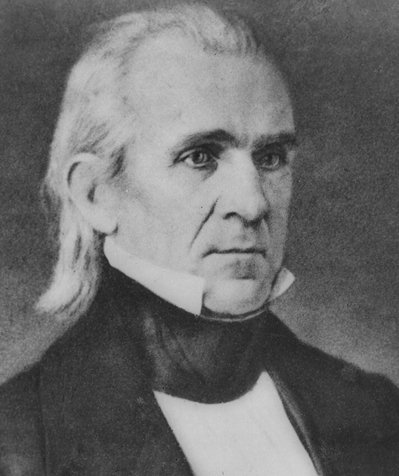
Complete the following:
Notes regarding Texan independence and the presidency of James K. Polk. Consult AMSCO 221-225 for help as well.
Questions:
Why did Americans move to the Texan territory initially? Manifest Destiny or a more practical reason?
Why was Texas initially denied statehood under Jackson and Tyler?
Why was Polk considered a 'dark horse' candidate for the presidency?
How would you describe the presidency of Polk? What were his major goals as president?
How did these foreign policy issues (border disputes, future war with Mexico, etc...) affect the country domestically? What issues resulted from expansionism and Manifest Destiny?
Saturday, October 06, 2007
Monroe's Presidency
Homework for the long weekend:
1. Complete the first steps (Reword question, brainstorm essentials, write thesis) for the 5th essay question for AMSCO Chapter 7.
2. Notes, AMSCO chapter 8.
3. Monroe Doctrine Questions:
Monroe Doctrine link
a. What relationship did the Monroe Doctrine seek to establish between the United States and Europe?
b. What relationship did the Monroe Doctrine seek to establish between the U.S. and Latin America? Why was the U.S. so interested in protecting the independence of newly-independent Latin American nations?
c. How does Monroe defend these policies in the Monroe Doctrine? What other American interests may have prompted such policies?
1. Complete the first steps (Reword question, brainstorm essentials, write thesis) for the 5th essay question for AMSCO Chapter 7.
2. Notes, AMSCO chapter 8.
3. Monroe Doctrine Questions:
Monroe Doctrine link
a. What relationship did the Monroe Doctrine seek to establish between the United States and Europe?
b. What relationship did the Monroe Doctrine seek to establish between the U.S. and Latin America? Why was the U.S. so interested in protecting the independence of newly-independent Latin American nations?
c. How does Monroe defend these policies in the Monroe Doctrine? What other American interests may have prompted such policies?
Tuesday, October 02, 2007
10/2 Homework
DUE TOMORROW:
1. Answer questions from the primary source I handed out in class regarding Madison's war message.
2. Write a short paragraph explaining the significance of the causes of the War of 1812.
DUE FRIDAY:
3. Reflection on your 2nd paper.
1. Answer questions from the primary source I handed out in class regarding Madison's war message.
2. Write a short paragraph explaining the significance of the causes of the War of 1812.
DUE FRIDAY:
3. Reflection on your 2nd paper.
Tuesday, September 18, 2007
Washington's Presidency
What were Hamilton and Jefferson's competing economic and political visions for the American republic?
Why did Hamilton favor a commercial and industrial model for the U.S. economy? Why did Jefferson favor an agrarian model?
How do Jefferson's and Hamilton's respective views of representation reflect differing interpretations of republicanism?
Why did Democratic-Republicans (Jeffersonians) favor closer relations with France, while Federalists (Hamiltonians) favored closer relations with the British?
Why did President Washington favor a policy of neutrality towards Britain and France?
Why did Hamilton favor a commercial and industrial model for the U.S. economy? Why did Jefferson favor an agrarian model?
How do Jefferson's and Hamilton's respective views of representation reflect differing interpretations of republicanism?
Why did Democratic-Republicans (Jeffersonians) favor closer relations with France, while Federalists (Hamiltonians) favored closer relations with the British?
Why did President Washington favor a policy of neutrality towards Britain and France?
Wednesday, September 12, 2007
September 12th, 2007 - Essay Notes
The link below will provide you with meaningful and helpful essay writing information. Please take the time to view and take notes regarding each of the four categories. Write down any questions you may have regarding each one.
J
http://www.murrayschools.org/MHS/apus/essays/default.htm
J
http://www.murrayschools.org/MHS/apus/essays/default.htm
Monday, August 06, 2007
AMSCO -- The Book you will need for CLASS

Please follow the instructions below if you can not get this book at Borders.
IN ORDER TO PURCHASE THIS BOOK YOU MUST GO ONLINE TO:
http://www.amscopub.com
GO TO ONLINE PUCHASING AND CLICK ON "AMERICAN HISTORY"
FIND THE ITEM NAME: R785P US HISTORY AP 2ND REV
THE COST IS $16.50
YOU CAN ALSO GO TO AMAZON.COM AND FIND USED ADDITIONS FOR CHEAPER PRICES (THERE WERE ONLY 25 IN STOCK AS OF 5/16/2007).
Wednesday, July 18, 2007
APUSH 2007-2008
Hello and welcome to the official blog of Mr. J's APUSH class. I hope you are all as excited as I am for summer and then a great school year. I am back from my wedding/honeymoon and as such, will have much more time to update this site as the summer goes on.
I have given you two assignments so far for the summer. One involves the 'Hall of Fame'. This is fairly self explanatory but feel free to ask any questions on the comment section below. The second assignment deal with a historical figure profile. I will be assigning each of you 2 or 3 (have not decided yet) historical figures to take on. The assignment was handed out on the last day of school (it's the one with the gerald ford template on it).
I will be assigning these figures in the next week or so but I would like each of you to check in by leaving a comment below with your name.
I may be requiring each of you to start a google account if you do not already have one. Google is one of the many tools that we will utilize this year in order to enhance our ability to study US History.
Again, please feel free to ask anything in the comment section. It would be helpful for me if you (anyone) could list as many names of people who are taking the class as possible. We will need to set up an e-mail or phone chain as well.
More to come, enjoy your summers!!
Notice the usable Google calendar on the right hand side of the site. You can use this to see the agenda for the day/week/month!
I have given you two assignments so far for the summer. One involves the 'Hall of Fame'. This is fairly self explanatory but feel free to ask any questions on the comment section below. The second assignment deal with a historical figure profile. I will be assigning each of you 2 or 3 (have not decided yet) historical figures to take on. The assignment was handed out on the last day of school (it's the one with the gerald ford template on it).
I will be assigning these figures in the next week or so but I would like each of you to check in by leaving a comment below with your name.
I may be requiring each of you to start a google account if you do not already have one. Google is one of the many tools that we will utilize this year in order to enhance our ability to study US History.
Again, please feel free to ask anything in the comment section. It would be helpful for me if you (anyone) could list as many names of people who are taking the class as possible. We will need to set up an e-mail or phone chain as well.
More to come, enjoy your summers!!
Notice the usable Google calendar on the right hand side of the site. You can use this to see the agenda for the day/week/month!
Thursday, May 03, 2007
AP Test Review - Progressive Movement - 1920s
Review your notes and the review packet in order to be ready for class tomorrow.
Study up on the Progressive Era, WWI, and the 1920s.
Study up on the Progressive Era, WWI, and the 1920s.
Friday, April 27, 2007
Research Paper - Evaluating a President
 Your assignment for the weekend is to write a research paper. The exact prompt is:
Evaluate the presidency of one of the following men:
John F. Kennedy
Lyndon B. Johnson
Richard M. Nixon
You must write in 12 pt Times New Roman font. 1.5 space between lines. No messing with margins. 3-7 pages long. Make sure you create a title page (and be creative for Pete's sake)
You must use 3 outside resources (not Pageant or AMSCO) of which only one may be an encyclopedia. Yes, that means you must read books (or parts of them). Use paranthetical references or foot/end notes and include a bibliography at the end. The more resources you use, the better off you will be in making a judgement. Click here for help with proper citation. ___________________________________________________________
Remember, this is a chance to choose a topic that you are interested in and then actually write a history about it. After all, isn't that why we are here?

Thursday, April 26, 2007
Homework 4-26
List the Cold War confrontations that occurred in:
1. Asia
2. Latin America
3. Europe
What is Detente? When did it begin? Was it an appropriate policy?
How did the anti-war movement manifest itself? Who partook in it?
1. Asia
2. Latin America
3. Europe
What is Detente? When did it begin? Was it an appropriate policy?
How did the anti-war movement manifest itself? Who partook in it?
Friday, April 13, 2007
April Vacation Assignment
Part I - Notes
Chapter 27 - Eisenhower Years - Pages 570-584
Terms:
Eisenhower
Nixon
Republicanism
Highway Act
Dulles
massive retaliation
Indochina
Geneva Conference
Ho Chi Minh
Vietnam
domino theory
SEATO
Eisenhower Doctrine
OPEC
Kruschev
Warsaw Pact
Sputnik
U-@ incident
Castro
Cuba
Military Industrial Complex
CIVIL RIGHTS TERMS
Jackie Robinson
NAACP
desegregation
Brown v. Board
Warren
Little Rock
Rosa Parks
Montgomery
MLK Jr.
Civil rights acts
nonviolence
corporate America
Chapter 28 Promises and Turmoil notes - pages 593-610
Terms:
JFK
New Frontier
Alliance for Progress
Bay of Pigs
Berlin Wall
Cuban missile crisis
flexible response
NTBT
Warren Commission
LBJ
Great Society
War on Poverty
Barry Goldwater
Medicare/Medicaid
Elementary Secondary Act
Civil Rights Act 64
24th Amendment
Voting Rights Act
Meredith
MLK Jr.
Malcolm X
Stokely Carmichael
Black Panthers
Watts
Brown v Board
Gideon v Wainwright
Edcobedo case
Miranda case
sep of church and state
New Left
counterculture
sexual revolution
women's movement
Vietnam War
Tonkin Gulf Resolution
Tet Offensive
hawks and doves
Part II - Annotated Timeline
Create an Annotated Timeline (just like the civil war timeline you did) regarding the Cold War.
Complete the timeline up to the end of Chapter 28 in AMSCO. Use both relevant foreign and domestic events. Be sure to give the date, and the significance of each event. Be neat.
Chapter 27 - Eisenhower Years - Pages 570-584
Terms:
Eisenhower
Nixon
Republicanism
Highway Act
Dulles
massive retaliation
Indochina
Geneva Conference
Ho Chi Minh
Vietnam
domino theory
SEATO
Eisenhower Doctrine
OPEC
Kruschev
Warsaw Pact
Sputnik
U-@ incident
Castro
Cuba
Military Industrial Complex
CIVIL RIGHTS TERMS
Jackie Robinson
NAACP
desegregation
Brown v. Board
Warren
Little Rock
Rosa Parks
Montgomery
MLK Jr.
Civil rights acts
nonviolence
corporate America
Chapter 28 Promises and Turmoil notes - pages 593-610
Terms:
JFK
New Frontier
Alliance for Progress
Bay of Pigs
Berlin Wall
Cuban missile crisis
flexible response
NTBT
Warren Commission
LBJ
Great Society
War on Poverty
Barry Goldwater
Medicare/Medicaid
Elementary Secondary Act
Civil Rights Act 64
24th Amendment
Voting Rights Act
Meredith
MLK Jr.
Malcolm X
Stokely Carmichael
Black Panthers
Watts
Brown v Board
Gideon v Wainwright
Edcobedo case
Miranda case
sep of church and state
New Left
counterculture
sexual revolution
women's movement
Vietnam War
Tonkin Gulf Resolution
Tet Offensive
hawks and doves
Part II - Annotated Timeline
Create an Annotated Timeline (just like the civil war timeline you did) regarding the Cold War.
Complete the timeline up to the end of Chapter 28 in AMSCO. Use both relevant foreign and domestic events. Be sure to give the date, and the significance of each event. Be neat.

Thursday, April 05, 2007
Truman - Terms
GI Bill
baby boom
suburban growth
employment act of 1946
inflation
Commitee on Civil Rights
22nd Amendment
Taft-Hartley Act
Dixiecrats
Strom Thurmond
Fair Deal
Cold War
Soviet Union
UN
World Bank
Iron Curtain
containment
Truman Doctine
Marshall Plan
Berlin Airlift
NATO
NSA
arms race
Chiang Kai-Shek
Mao Zedong
Stalin
Korean War
House Un-American Activities Committee
Also, due to recent comments made on the site, you will no longer be able submit them. If there is any confusion regarding homework or anything else, see me at your soonest possible convenience.
baby boom
suburban growth
employment act of 1946
inflation
Commitee on Civil Rights
22nd Amendment
Taft-Hartley Act
Dixiecrats
Strom Thurmond
Fair Deal
Cold War
Soviet Union
UN
World Bank
Iron Curtain
containment
Truman Doctine
Marshall Plan
Berlin Airlift
NATO
NSA
arms race
Chiang Kai-Shek
Mao Zedong
Stalin
Korean War
House Un-American Activities Committee
Also, due to recent comments made on the site, you will no longer be able submit them. If there is any confusion regarding homework or anything else, see me at your soonest possible convenience.
Wednesday, April 04, 2007
APUSH terms 4/4/07
Define and give significance of the following terms... remember, if all you are doing is searching for the basics and copying it from the book to your notes, you will have trouble understanding the history behind it all. If you share notes, get them done tonight and study what others did... simply having terms and notes in a binder doesn't mean you know the info.
good-neighbor policy
pan-american conferences
Soviet Union
fascism
Mussolini
Nazi Party
Hitler
Axis Powers
isolationism
Nye Committee
neutrality acts
Spanish Civil War
America First Committee
appeasement
Poland/blitzkreig
cash and carry
Selective Service and Training Act
destroyers for bases deal
four freedoms
Lend-Lease Act
Atlantic Charter
Pearl Harbor
good-neighbor policy
pan-american conferences
Soviet Union
fascism
Mussolini
Nazi Party
Hitler
Axis Powers
isolationism
Nye Committee
neutrality acts
Spanish Civil War
America First Committee
appeasement
Poland/blitzkreig
cash and carry
Selective Service and Training Act
destroyers for bases deal
four freedoms
Lend-Lease Act
Atlantic Charter
Pearl Harbor
Tuesday, April 03, 2007
FDR - New Deal - 4/3 HW
Consider your notes regarding the New Deal. List 2 things in your notebook...
1. Who supported it and who was against it? Reasoning?
2. List the effects it had on American society. Be sure to include all groups within the country (ie: labor [industry and agriculture], African-Americans, Native Americans, and other minorities, women, different social classes).
Once you have listed these in your notebook, answer the following:
3. Was the New Deal a success or a failure? Answer with an intro paragraph... follow the three steps to writing a good intro:
a. Reword the question if necessary
b. Brainstrom relevant information
c. Create a thesis statment that addresses the question head on
4. GENERAL NOTES FOR #4 -- Start to consider the extent to which FDR expanded the powers of the presidency.
1. Who supported it and who was against it? Reasoning?
2. List the effects it had on American society. Be sure to include all groups within the country (ie: labor [industry and agriculture], African-Americans, Native Americans, and other minorities, women, different social classes).
Once you have listed these in your notebook, answer the following:
3. Was the New Deal a success or a failure? Answer with an intro paragraph... follow the three steps to writing a good intro:
a. Reword the question if necessary
b. Brainstrom relevant information
c. Create a thesis statment that addresses the question head on
4. GENERAL NOTES FOR #4 -- Start to consider the extent to which FDR expanded the powers of the presidency.
Thursday, March 22, 2007
WWI Terms
Sussex Pledge
propaganda
Zimmerman Telegram
Russian Revolution
Election of 1916
Declaration of War
sorry for the late post.
propaganda
Zimmerman Telegram
Russian Revolution
Election of 1916
Declaration of War
sorry for the late post.
Friday, March 16, 2007
Homework: Progressive Era

For the weekend of March 16th-18th you should:
Outline Chapter 21 in AMSCO
Define and give the significance of appropriate terms.
Tuesday, March 13, 2007
Imperialism in China and Panama, Roosevelt Corollary

Finish reading and notes for Chapter 30
Terms:
Phillipine Commision and "benevolent assimilation"
Open Door Policy
Boxer Rebellion
Hay-Pauncefote Treaty of 1901
"Big Brother" policy
"preventitive intervention" and the Roosevelt Corollary
Root-Takahira agreement of 1908
What is meant by "Big Stick Diplomacy"?
Friday, March 09, 2007
Weekend of 3/9-3/11 Homework
Page 664-673 in Pageant. Read and outline.
Terms:
Cuba, Puerto Rico, Guam, the Philippines, Treaty of Paris, Anti-imperialism, self- determination, Anti-Imperialist League, Philippine?American War, Emilio Auginaldo, Taft Commission, the Insular Cases (DeLima v. Bidwell, Downes v. Bidwell, etc.), Foraker Act, Leonard Wood, Platt Amendment, Jones Act
Homework Question:
1. Why did the proposed annexation of the Philippines create such conflict among Americans? What were the arguments for and against the annexation of the Philippines?
2. What arguments did Anti-imperialists use to oppose annexation of the Philippines and imperialism more generally? Why might individuals as diverse as Samuel Gompers, Andrew Carnegie, and Booker T. Washington have all opposed imperialism? What impact might this diversity have had on the effectiveness of the anti- imperialist movement? 3. How might both imperialism and anti-imperialism be seen as progressive?
4. Traditionally, why might historians have rarely written about the Philippine- American War?
5. Why had Philippine leader Emilio Auginaldo supported the United States in the Spanish-American War? Why did Auginaldo, who had supported the U.S. in the Spanish-American War, then lead a revolt against the U.S. in 1899?
6. What was the Taft Commission? What did it indicate about the way Americans saw their role in the Philippines? In what sense was the Taft Commission progressive?
7. What principle did the U.S. Supreme Court assert in the Insular Cases (Dooley v. U.S., Downes v. Bidwell, etc.)? What did this suggest about the way Americans viewed the peoples of territories annexed by the United States during the late 19th century?
8. What was the Foraker Act? What did it suggest about the way Americans viewed the United Statesí role in the Western Hemisphere during the late 19th and early 20th century?
9. What were the provisions of the Platt Amendment? What did it suggest about the way Americans viewed the United Statesí role in the Western Hemisphere during the late 19th and early 20th century?
Terms:
Cuba, Puerto Rico, Guam, the Philippines, Treaty of Paris, Anti-imperialism, self- determination, Anti-Imperialist League, Philippine?American War, Emilio Auginaldo, Taft Commission, the Insular Cases (DeLima v. Bidwell, Downes v. Bidwell, etc.), Foraker Act, Leonard Wood, Platt Amendment, Jones Act
Homework Question:
1. Why did the proposed annexation of the Philippines create such conflict among Americans? What were the arguments for and against the annexation of the Philippines?
2. What arguments did Anti-imperialists use to oppose annexation of the Philippines and imperialism more generally? Why might individuals as diverse as Samuel Gompers, Andrew Carnegie, and Booker T. Washington have all opposed imperialism? What impact might this diversity have had on the effectiveness of the anti- imperialist movement? 3. How might both imperialism and anti-imperialism be seen as progressive?
4. Traditionally, why might historians have rarely written about the Philippine- American War?
5. Why had Philippine leader Emilio Auginaldo supported the United States in the Spanish-American War? Why did Auginaldo, who had supported the U.S. in the Spanish-American War, then lead a revolt against the U.S. in 1899?
6. What was the Taft Commission? What did it indicate about the way Americans saw their role in the Philippines? In what sense was the Taft Commission progressive?
7. What principle did the U.S. Supreme Court assert in the Insular Cases (Dooley v. U.S., Downes v. Bidwell, etc.)? What did this suggest about the way Americans viewed the peoples of territories annexed by the United States during the late 19th century?
8. What was the Foraker Act? What did it suggest about the way Americans viewed the United Statesí role in the Western Hemisphere during the late 19th and early 20th century?
9. What were the provisions of the Platt Amendment? What did it suggest about the way Americans viewed the United Statesí role in the Western Hemisphere during the late 19th and early 20th century?
Wednesday, March 07, 2007
Homework, Night of Wednesday March 7th

Read and outline pages 641-649 (stop at Dewey's May Day...)
Terms and Names:
Alaska Purchase
"new imperialism"
"new imperialism"
"Big Sister Policy"
Pan-American Conference
Monroe Doctrine (revisited)
Hawaiin issue (describe annexation wishes)
Cuban Revolution
jingoism
"yellow journalism" (role it played in affairs of Latin America)
the Maine incident
Teller Amendment
Friday, March 02, 2007
Night of Monday February 5th Homework
If you haven't already, take notes on Pageant 28. Appropriate terms and names defined.
William Jennings Bryan "Cross of Gold" speech
Homework Questions:
1. What principles did the Democratic Party support during the last decades of the 19th century? What principles did the Republican Party support? What policies did each party promote? What groups of people tended to vote Democratic? Republican?
2. What were the sources of agrarian discontent during the late 19th century? In what sense was their discontent based on economic factors? In what sense was their discontent as much the result of cultural changes in American society during the late 19th century as it was the result of economic concerns?
3. What were the initial purposes of the Grange and the farmersí alliances of the late 19th century? How did they evolve into a political movement?
4. What role did blacks play in farmer alliances and in the emerging Populist movement? How did whites in these organizations view blacks?
5. How did the Populists fair in the election of 1892? In what sense were election results disappointing to Populists? In what sense were the Populists successful?
The following questions relate to the speech linked above.
6. In his "Cross of Gold" speech, how does Bryan (a Populist-Democrat) depict the Democratic party? What critique of his political opponents is implicit in Bryanís speech?
7. In his "Cross of Gold" speech, how does Bryan characterize cities? How does he characterize farming? What does this indicate about the cultural concerns of the Populist movement?
8. In the "Cross of Gold," what does Bryan mean when he says that "It is the issue of 1776 all over again."?
9. In the "Cross of Gold," how does Bryan depict the gold and the gold standard? How does he depict silver?
William Jennings Bryan "Cross of Gold" speech
Homework Questions:
1. What principles did the Democratic Party support during the last decades of the 19th century? What principles did the Republican Party support? What policies did each party promote? What groups of people tended to vote Democratic? Republican?
2. What were the sources of agrarian discontent during the late 19th century? In what sense was their discontent based on economic factors? In what sense was their discontent as much the result of cultural changes in American society during the late 19th century as it was the result of economic concerns?
3. What were the initial purposes of the Grange and the farmersí alliances of the late 19th century? How did they evolve into a political movement?
4. What role did blacks play in farmer alliances and in the emerging Populist movement? How did whites in these organizations view blacks?
5. How did the Populists fair in the election of 1892? In what sense were election results disappointing to Populists? In what sense were the Populists successful?
The following questions relate to the speech linked above.
6. In his "Cross of Gold" speech, how does Bryan (a Populist-Democrat) depict the Democratic party? What critique of his political opponents is implicit in Bryanís speech?
7. In his "Cross of Gold" speech, how does Bryan characterize cities? How does he characterize farming? What does this indicate about the cultural concerns of the Populist movement?
8. In the "Cross of Gold," what does Bryan mean when he says that "It is the issue of 1776 all over again."?
9. In the "Cross of Gold," how does Bryan depict the gold and the gold standard? How does he depict silver?
Subscribe to:
Posts (Atom)